

Finding the best futures trading platform in the UK in 2026 comes down to regulation, costs, and access to global futures markets.
This guide compares FCA-regulated and UK-available platforms based on trading fees, margin requirements, trading tools, and usability.
Key takeaway: What is the best futures trading platform in the UK?
Interactive Brokers is the strongest option for experienced traders due to low commissions and global market access. For beginner-friendly futures access, eToro stands out with CME-listed Spot-Quoted Futures and low entry requirements, while IG and Pepperstone are better suited to traders who prefer futures-style exposure via CFDs or spread betting rather than trading listed futures directly.
Top futures brokers UK
- Interactive Brokers – Best for advanced traders who want direct exchange-traded futures, ultra-low commissions, global market access, and professional-grade execution tools.
- IG – Best for UK traders seeking futures exposure via CFDs or spread betting, strong regulation, deep liquidity, and advanced research tools.
- Pepperstone – Best for active traders wanting low-cost futures-style trading through CFD and spread bet forwards with fast execution on MT5, cTrader, and TradingView.
- eToro – Best for beginners and casual traders looking for accessible futures via CME-listed Spot-Quoted Futures with low entry requirements and a simple platform.
- Capital.com – Best for beginner and intermediate traders who want simple, low-cost futures-style CFD trading with strong education and a mobile-first experience.
UK futures trading platforms compared
| Platform | Futures access type | Platforms & tools | Typical costs | Best for |
|---|---|---|---|---|
| Interactive Brokers | Direct exchange-traded futures (micro, mini, standard) | Trader Workstation, web, mobile, APIs | From $0.25–$0.85 per contract | Advanced and professional traders |
| IG | CFDs & spread betting on underlying futures | IG platform, mobile app, MT4 | Commission-free, spreads apply | CFD and spread-bet futures traders |
| Pepperstone | CFD Forwards & Spread Bet Forwards | MT5, cTrader, TradingView | No commission, no overnight funding | Low-cost active traders |
| eToro | Exchange-listed Spot-Quoted Futures (CME) | eToro web & app | Flat fee per contract, low entry | Beginners entering futures |
| Capital.com | CFDs at futures-style pricing | Capital.com app, TradingView, MT4 | 0% commission, spreads + overnight fees | Simple, mobile-first CFD trading |
1. eToro – Best for beginners trading futures
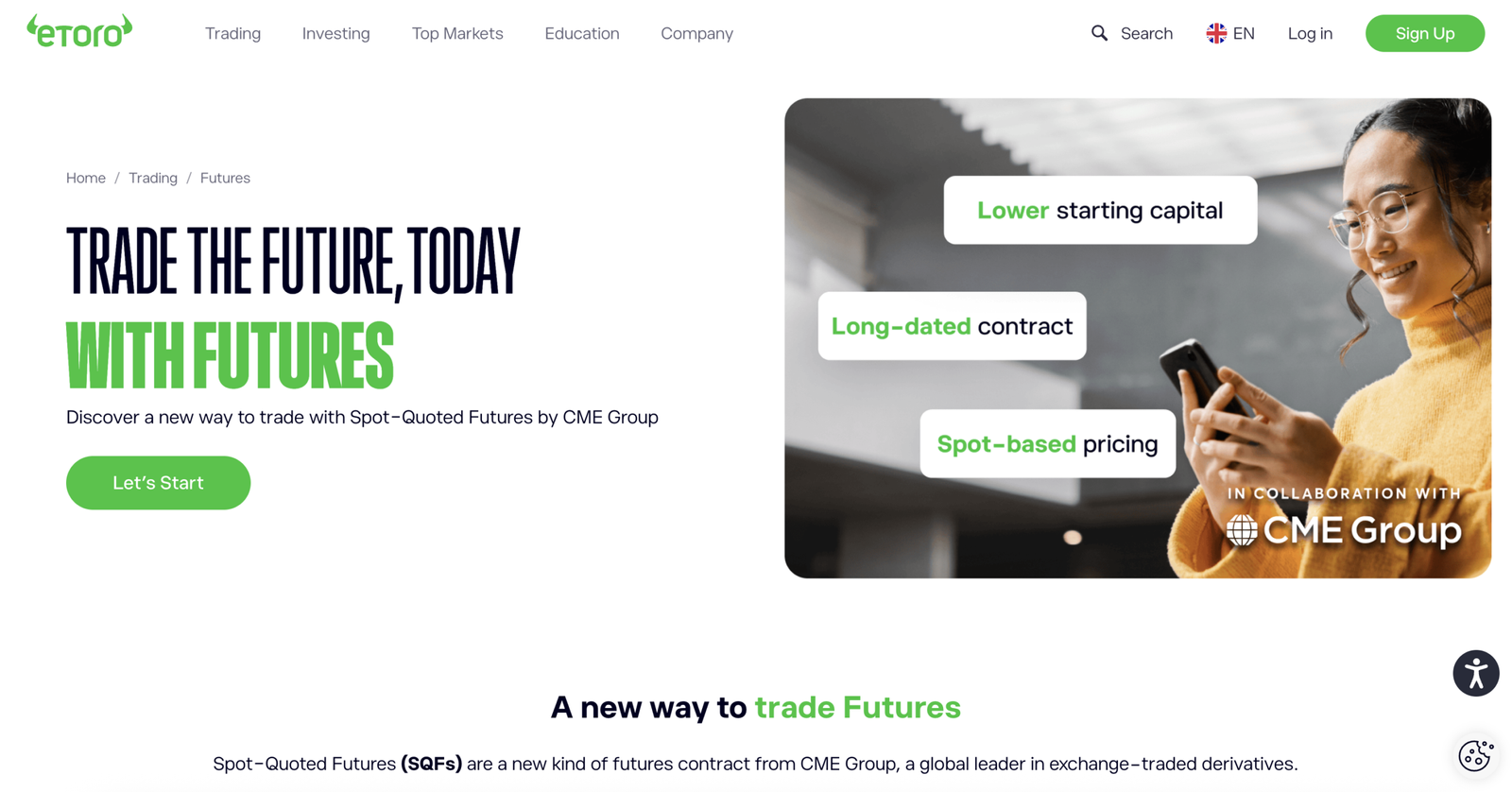
eToro is one of the most accessible futures trading platforms for UK retail traders in 2026, due to FCA regulation, low starting margins, and innovative CME-listed Spot-Quoted Futures. It is designed for simplicity and transparency rather than professional-level futures trading, making it particularly suitable for beginners and casual traders.
Key information: eToro futures trading
| Feature | Details |
|---|---|
| UK regulation | FCA authorised and regulated |
| Exchange access | CME Group (regulated exchange) |
| Futures types | Spot-Quoted Futures, Micro Futures |
| Minimum margin | From approx. $200 |
| Expiry | Annual (SQFs) or standard CME expiries |
| Rollover fees | None for SQFs |
| Execution model | Exchange-traded, cash-settled |
| FSCS protection | Up to £85,000 on cash only |
| Demo account | Yes |
Is this futures trading platform FCA-regulated and safe for UK traders?
Yes. eToro is authorised and regulated by the UK Financial Conduct Authority, which means it must meet strict rules on client protection, capital requirements, and conduct.
How much does it cost to trade futures on this platform?
eToro uses a flat, all-inclusive commission per futures contract, which simplifies cost comparison for UK traders. The displayed fee covers exchange execution, clearing, and regulatory charges, with $0.75 per contract retained by eToro as a service fee. Spot-Quoted Futures avoid traditional rollover fees and instead apply a transparent daily adjustment.
What futures markets and contracts can you trade?
UK users can trade CME-listed futures, including Spot-Quoted Futures designed to track spot prices closely and Micro Futures with smaller contract sizes. Available markets include major US equity indices such as the S&P 500, Nasdaq 100, Dow Jones, and Russell 2000, as well as crypto futures on Bitcoin and Ethereum. All contracts on eToro are cash-settled.
How good is the trading platform and order execution?
The eToro platform is clean, intuitive, and beginner-friendly, allowing traders to execute multiple futures contracts in a single transaction from one multi-asset portfolio. Order placement is simple and fast, but the platform lacks the advanced charting, automation, and customisation expected by professional futures traders.
Does this platform offer reliable execution and liquidity?
Yes. Futures trades are executed on regulated exchanges such as CME, where the exchange acts as the counterparty to every buyer and seller. This structure supports strong liquidity, transparent pricing, and reduced counterparty risk during official exchange trading hours.
Who is this futures trading platform best for?
eToro is best for UK retail traders who want a straightforward, regulated way to access futures markets with lower entry costs. It suits beginners, casual traders, and existing eToro users exploring futures for the first time. It is less suitable for high-frequency, algorithmic, or professional futures traders.
Read the complete eToro review here.
Pros and cons of eToro for futures trading
| Pros | Cons |
|---|---|
| FCA-regulated and UK-compliant | Limited advanced futures analytics |
| Low starting margin from ~$200 | No CopyTrader support for futures |
| No monthly rollovers on SQFs | Not built for high-frequency trading |
| CME exchange execution | USD-based pricing may cause FX costs |
| Beginner-friendly platform and demo account | Fewer tools than specialist futures brokers |
2. IG – Best for futures exposure via CFDs and spread betting
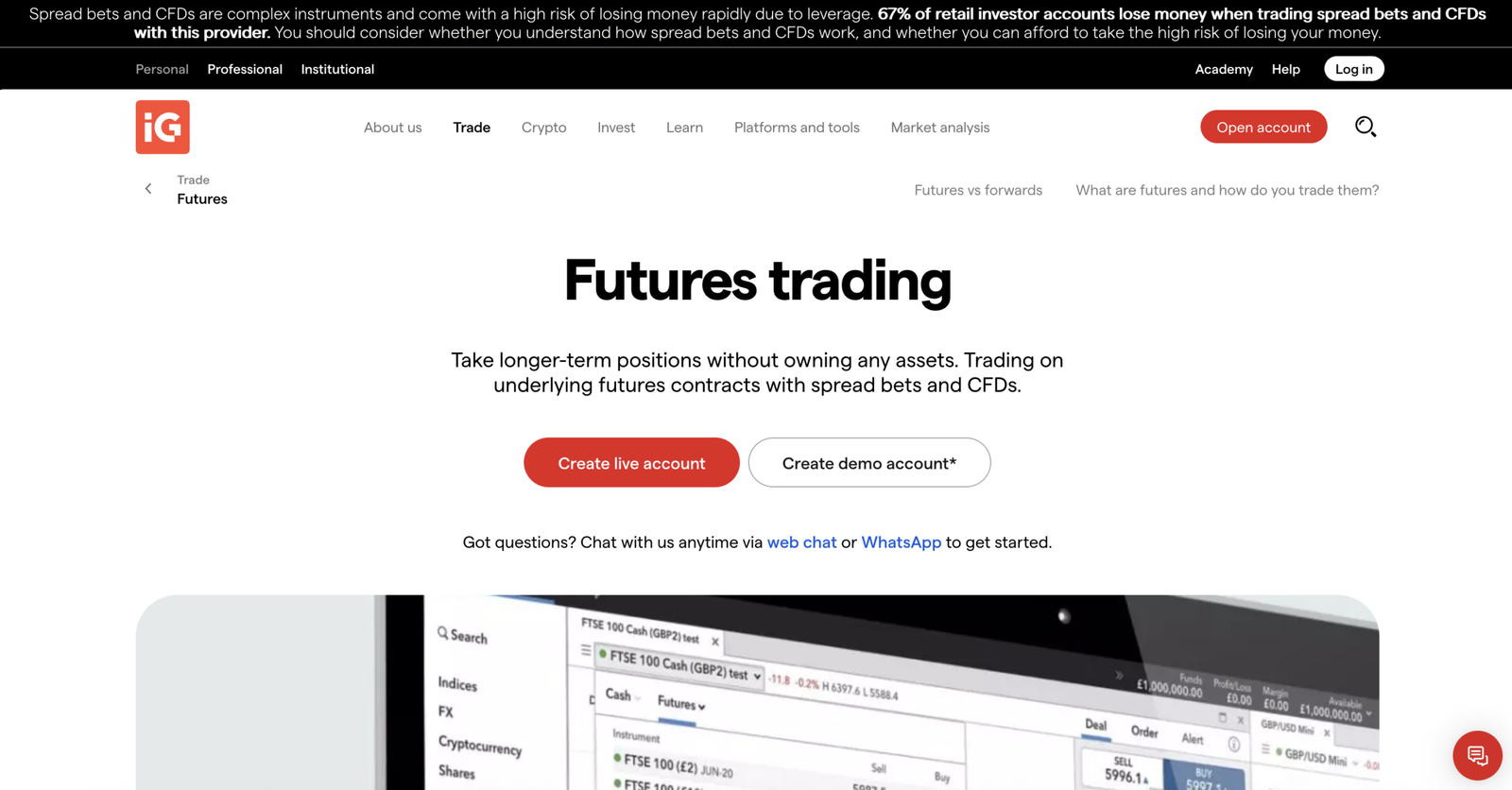
IG is one of the best futures brokers available to UK traders in 2026, offering futures exposure via spread betting and CFDs on underlying futures prices. With FCA regulation, deep internal liquidity, and a powerful trading platform, IG is built for reliability and scale rather than simplified exchange-style futures access.
Key information: IG futures trading
| Feature | Details |
|---|---|
| UK regulation | FCA authorised and regulated |
| How futures are traded | Spread bets and CFDs on underlying futures |
| Exchange access | OTC pricing referencing listed futures |
| Markets available | Indices, commodities, bonds, rates, FX forwards |
| Minimum margin | From 5% to 20% depending on market |
| Overnight funding | None on futures |
| Execution model | OTC with deep internal liquidity |
| FSCS protection | Up to £85,000 on eligible funds |
| Demo account | Yes (CFDs and spread betting only) |
Is this futures trading platform FCA-regulated and safe for UK traders?
Yes. IG is authorised and regulated by the UK Financial Conduct Authority and is considered one of the safest trading providers in the UK.
How much does it cost to trade futures on this platform?
IG offers commission-free futures trading when using spread bets or CFDs, with costs built into the dealing spread. Futures positions do not incur overnight funding fees, making them more cost-effective for longer-term trades compared with spot markets. Spreads vary by market and trading hours, with margins typically starting from 5%.
What futures markets and contracts can you trade?
UK traders can access a wide range of futures markets through IG, including index futures such as the FTSE 100 and Wall Street, commodity futures like oil and gold, and bond and rates futures. Positions track the pricing and expiry of the underlying futures contract but are traded over the counter rather than directly on an exchange.
How good is the trading platform and order execution?
IG offers an award-winning trading platform available on web, mobile, and MT4. The platform includes advanced charting, price alerts, and professional-grade risk management tools. Execution is fast and reliable, but the interface can feel complex for beginners compared with simpler retail-focused platforms.
Does this platform offer reliable execution and liquidity?
Yes. IG provides deep internal liquidity across its futures markets, supported by a large global client base and proprietary technology. This helps maintain tight pricing and reliable execution, even during volatile periods, although pricing is OTC rather than direct exchange access.
Who is this futures trading platform best for?
IG is best for UK traders who want futures exposure through CFDs or spread betting with strong regulation, advanced tools, and long-term cost efficiency. It suits experienced traders, hedgers, and those placing longer-term positions. It is less suitable for traders seeking direct exchange-traded futures or very simple, beginner-only interfaces.
Read the complete IG review here.
Pros and cons of IG for futures trading
| Pros | Cons |
|---|---|
| FCA-regulated with long UK track record | Futures traded OTC, not direct exchange access |
| No overnight funding on futures | Platform can feel complex for beginners |
| Commission-free futures via spreads | Spreads wider outside core market hours |
| Deep liquidity and reliable execution | Not designed for micro or low-margin futures |
| Powerful web, mobile, and MT4 platforms | Less transparent than exchange-listed futures |
3. Interactive Brokers – Best for advanced futures traders
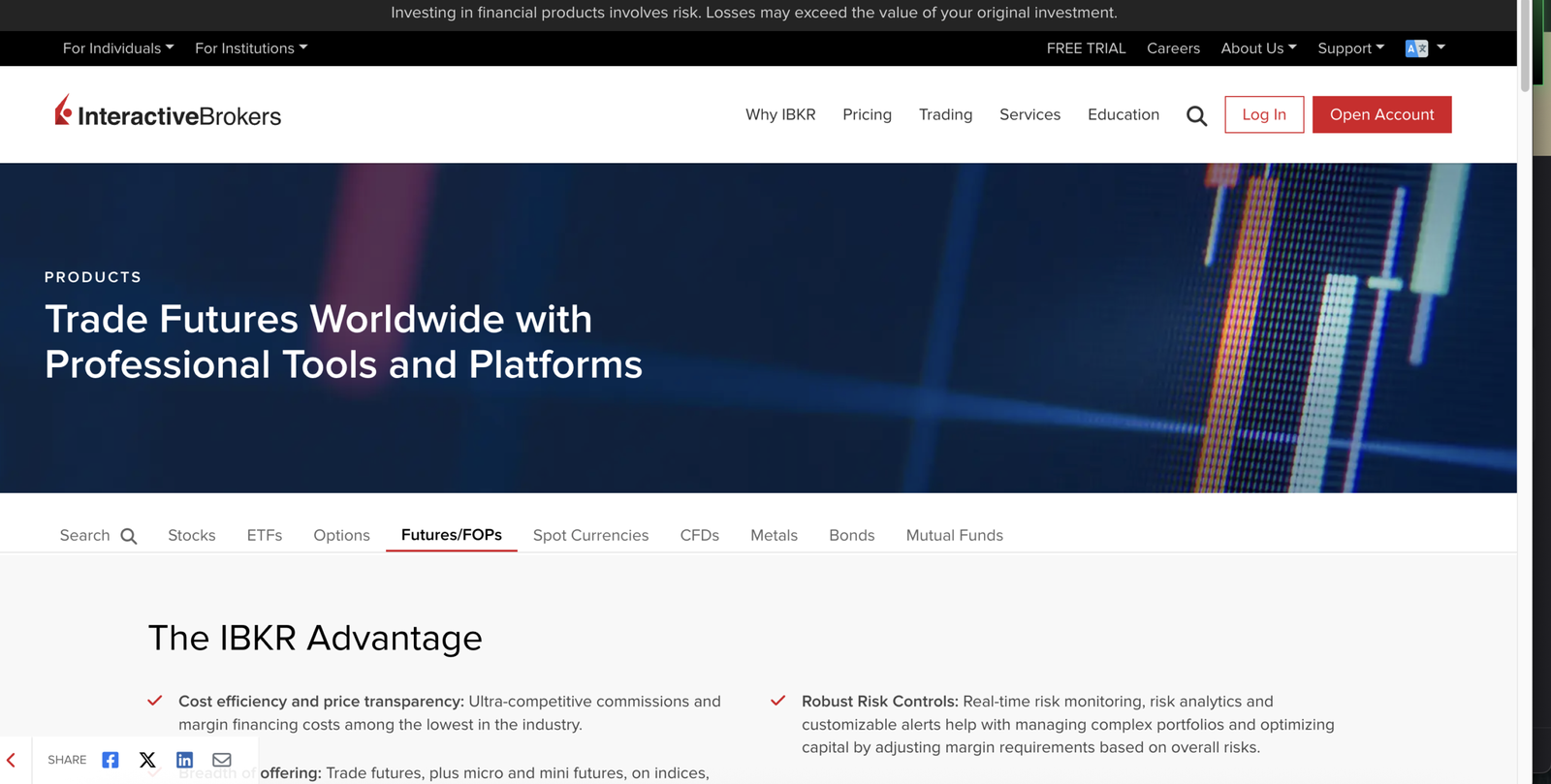
Interactive Brokers is a professional-grade futures broker for UK traders in 2026, best known for low commissions, deep global exchange access, and advanced execution tools. It is FCA-regulated in the UK, but the platform is complex, so it suits active and experienced traders more than beginners.
Key information: Interactive Brokers futures trading
| Feature | Details |
|---|---|
| UK regulation | Interactive Brokers (U.K.) Limited is FCA authorised and regulated |
| How futures are traded | Direct futures trading on exchanges, including micro and mini futures |
| Exchange access | 30+ global market centres |
| Futures commissions | From USD $0.25 to $0.85 per contract |
| Platforms | Trader Workstation (TWS), web and mobile platforms, plus APIs |
| Order types | 100+ order types and algorithms |
| Execution | Best execution support via IB SmartRouting |
| FSCS protection | Up to £85,000 in eligible circumstances |
Is this futures trading platform FCA-regulated and safe for UK traders?
Yes. Interactive Brokers operates in the UK through an FCA-authorised entity and is considered very safe for UK traders. Client funds are held in segregated accounts, and eligible clients can receive FSCS protection up to £85,000 if the firm fails. This protection does not cover trading losses from futures or leverage.
How much does it cost to trade futures on this platform?
Interactive Brokers is one of the lowest-cost futures brokers available to UK traders. Futures commissions typically range from USD $0.25 to $0.85 per contract, depending on the exchange and product. Exchange fees, market data subscriptions, and margin costs may apply separately, but pricing is transparent and competitive for active traders.
What futures markets and contracts can you trade?
UK users can trade a wide range of futures across equity indices, interest rates, currencies, commodities, and cryptocurrencies. Interactive Brokers also supports micro and mini futures, allowing traders to size positions more precisely. Futures are available across more than 30 global exchanges.
How good is the trading platform and order execution?
Interactive Brokers offers some of the most advanced futures trading platforms available to retail traders. Trader Workstation provides deep analytics, advanced charting, and professional-grade execution tools. Over 100 order types and algorithmic strategies are available, alongside APIs for traders building automated or custom systems.
Does this platform offer reliable execution and liquidity?
Yes. Interactive Brokers focuses heavily on execution quality, using smart order routing to seek competitive pricing and liquidity across venues. Execution speed and reliability are among its strongest features, making it well-suited to active and high-frequency futures strategies.
Who is this futures trading platform best for?
Interactive Brokers is best for experienced UK traders who want direct access to exchange-traded futures, low per-contract costs, and advanced execution tools. It suits active, professional, and algorithmic traders. It is not ideal for beginners or traders who want a simple, guided futures trading experience.
Read the complete Interactive Brokers review here.
Pros and cons of Interactive Brokers for futures trading
| Pros | Cons |
|---|---|
| Very low futures commissions | Steep learning curve for new traders |
| Direct exchange access across 30+ markets | Platform can feel overwhelming |
| Advanced platforms and execution tools | Market data fees may apply |
| 100+ order types and algorithmic trading support | Not beginner-friendly |
| FCA regulation and strong financial stability | Futures trading involves high risk and leverage |
4. Pepperstone – Best for low-cost futures-style trading
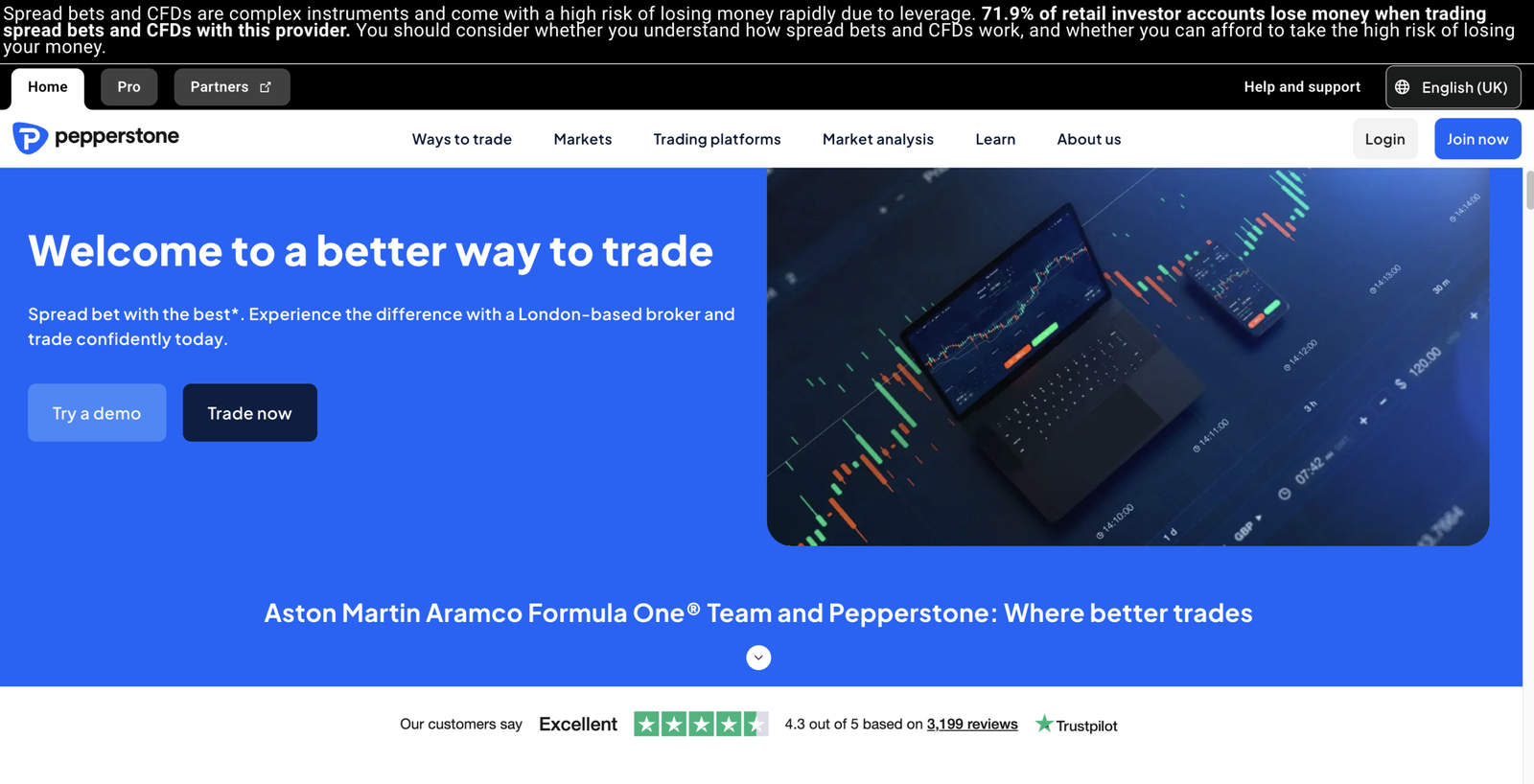
Pepperstone offers UK traders futures-style exposure via CFD Forwards and Spread Bet Forwards in 2026, combining FCA regulation, low costs, and fast execution. These products track underlying futures prices without overnight funding charges, making Pepperstone a strong option for active traders who want futures-like trading without using an exchange.
Key information: Pepperstone forwards and futures-style trading
| Feature | Details |
|---|---|
| UK regulation | FCA authorised and regulated |
| How futures are traded | CFD Forwards and Spread Bet Forwards (OTC) |
| Underlying pricing | Front-month futures contracts |
| Markets available | Indices, commodities, metals |
| Platforms | MetaTrader 5, cTrader (TradingView coming soon) |
| Overnight funding | None on forward contracts |
| Commission | No separate commission |
| Execution model | OTC with deep liquidity |
| FSCS protection | Up to £85,000 on eligible funds |
Is this futures trading platform FCA-regulated and safe for UK traders?
Yes. Pepperstone is authorised and regulated by the UK Financial Conduct Authority and is considered a highly trusted broker for UK traders.
How much does it cost to trade futures on this platform?
Pepperstone does not charge a separate commission on CFD Forwards or Spread Bet Forwards. Costs are built into the spread, and there are no overnight funding charges, as financing and dividends are factored into the forward price. The only cost at rollover is the market spread, with any price difference adjusted via a cash credit or debit.
What futures markets and contracts can you trade?
UK traders can access a focused range of forward contracts based on popular futures markets. These include major indices such as GER40, UK100, US500, NAS100, US30 and JPN225, plus commodities like crude oil, Brent oil, gold, and silver. Contract lengths typically range from one to three months, with automatic rolling aligned to the underlying futures contract.
How good is the trading platform and order execution?
Pepperstone delivers fast and reliable execution on MetaTrader 5 and cTrader, with TradingView integration planned. Traders benefit from advanced charting, algorithmic trading support, and extensive risk management tools. Execution quality is one of Pepperstone’s core strengths, particularly for short-term and systematic strategies.
Does this platform offer reliable execution and liquidity?
Yes. Pepperstone provides deep liquidity at the bid-offer price across its forward markets, helping to minimise slippage during execution. Liquidity is comparable to its cash CFD markets and is designed to remain stable even during volatile conditions, although pricing is OTC rather than exchange-traded.
Who is this futures trading platform best for?
Pepperstone is best for UK traders who want futures-style exposure with higher leverage, no overnight funding, and access through familiar platforms like MT5 and cTrader. It suits day traders, scalpers, and algorithmic traders. It is less suitable for traders who want direct exchange-traded futures or physical delivery.
Read the complete Pepperstone review here.
Pros and cons of Pepperstone for futures-style trading
| Pros | Cons |
|---|---|
| FCA-regulated with strong UK protections | No direct exchange-traded futures |
| No overnight funding on forward contracts | Automatic contract roll may not suit all strategies |
| No separate commission on forwards | Smaller futures-style market range than global brokers |
| Fast execution and deep liquidity | Trading is OTC rather than on an exchange |
| MT5, cTrader and TradingView support | Futures pricing differs from listed contracts |
5. Capital.com – Best for simple CFD-based futures trading
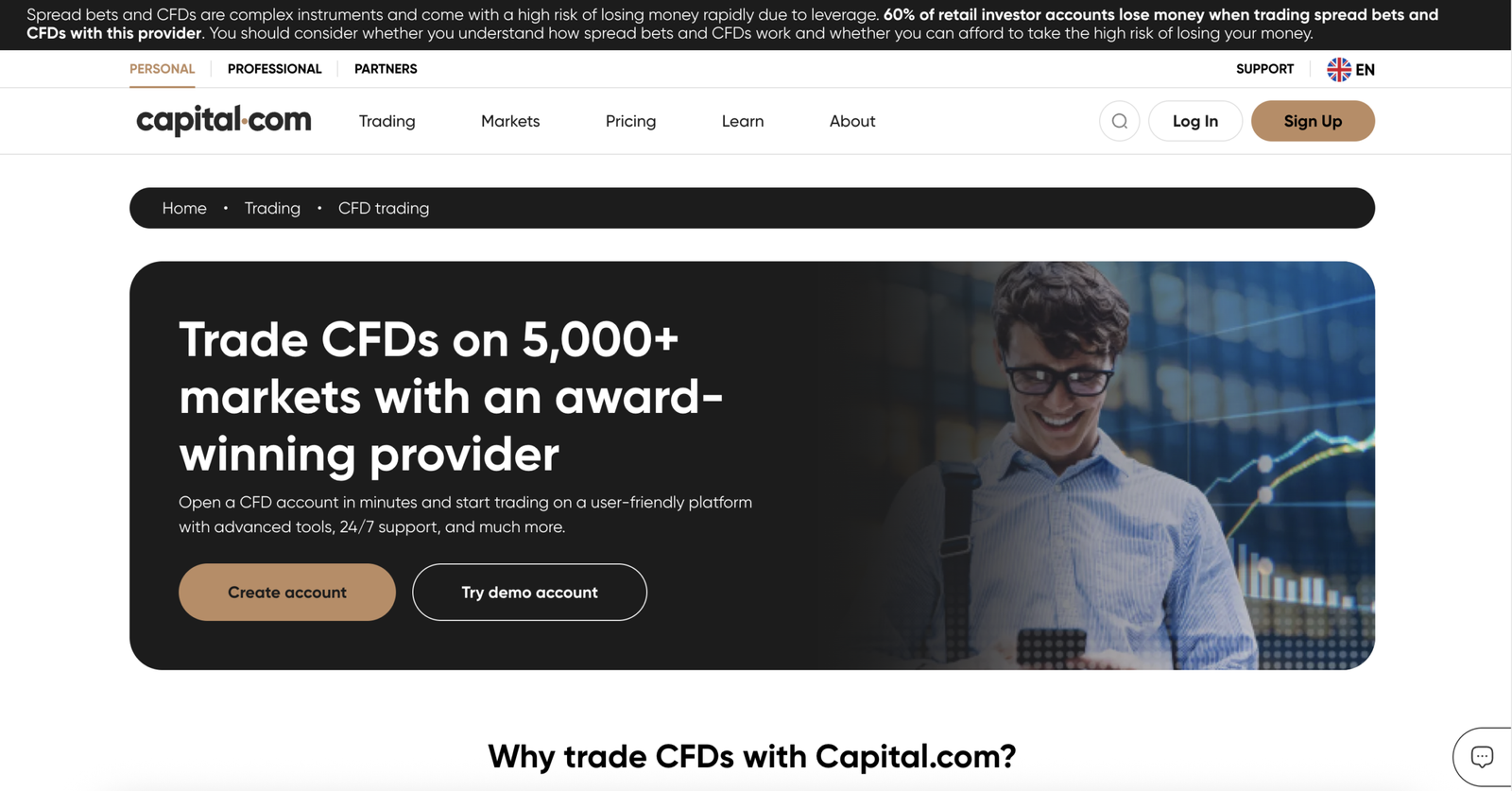
Capital.com is an FCA-regulated CFD and spread betting platform for UK traders in 2026, offering futures-style exposure by letting you trade CFDs at spot or “futures price” without owning any underlying contracts. It is beginner-friendly and low-cost, but it is not a direct exchange-traded futures platform, and CFD leverage significantly increases risk.
Key information: Capital.com futures-style trading
| Feature | Details |
|---|---|
| UK regulation | FCA authorised and regulated |
| How futures are traded | CFDs and (UK-only) spread betting on markets including futures-priced CFDs |
| Direct exchange-traded futures | No (derivatives only, not listed futures ownership) |
| Markets available | 5,000+ markets across forex, indices, shares, commodities (CFDs) |
| Pricing model | No commission, costs mainly via spreads |
| Leverage | Up to 30:1 for retail clients (varies by market) |
| Platforms | Capital.com web and app, TradingView integration, MT4 support |
| Demo account | Yes |
| FSCS protection | Up to £85,000 on eligible client funds |
Is this futures trading platform FCA-regulated and safe for UK traders?
Yes. Capital.com is FCA-regulated for UK clients, with standard protections such as segregated client funds and negative balance protection for retail traders. Eligible UK client funds can be protected by the FSCS up to £85,000 if the firm fails. This does not protect you from trading losses, and CFDs can lose money quickly because of leverage.
How much does it cost to trade futures on this platform?
Capital.com markets a low-cost model with 0% commission, where the main trading cost is the spread between buy and sell prices. You may also pay overnight fees on leveraged positions, which matters if you hold trades beyond the trading day.
If you want to avoid overnight funding on certain setups, Capital.com also offers a 1X (unleveraged) approach on selected markets, but futures trading on the platform is still via derivatives rather than exchange-traded contracts.
What futures markets and contracts can you trade?
You can trade futures-style exposure via CFDs across major asset classes such as indices, commodities, forex, and shares, including pricing that can reflect futures levels on some markets. However, you are not trading CME or ICE futures contracts directly, and you won’t get exchange-specific contract features like listed order books or true contract specifications in the same way as a futures broker.
How good is the trading platform and order execution?
Capital.com is strong for usability and speed, especially on mobile, with clean order panels and beginner-friendly controls. Advanced traders can plug into TradingView for deeper charting and use MT4 for more traditional workflows. The platform experience is designed around quick analysis, simple risk controls, and fast trade placement rather than professional futures tooling.
Does this platform offer reliable execution and liquidity?
Capital.com emphasises fast execution and access to highly liquid CFD markets, particularly on major forex pairs, indices, and large-cap shares. Liquidity is typically strongest on the most traded instruments, while slippage risk can increase in volatile markets or out-of-hours sessions. As with all CFD trading platforms, pricing and execution depend on the broker’s liquidity providers rather than direct exchange matching.
Who is this futures trading platform best for?
Capital.com is best for UK beginners and intermediate traders who want simple, low-cost derivative trading with strong education tools and a polished mobile platform. It suits short-term traders who prefer trading indices, forex, and commodities through CFDs or spread betting. It is not suitable for traders who specifically want direct exchange-traded futures access, listed futures analytics, or a long-term investing account like an ISA or SIPP.
Read the complete Capital.com review here.
Pros and cons of Capital.com for futures-style trading
| Pros | Cons |
|---|---|
| FCA-regulated with strong UK client protections | CFDs only, no direct exchange-traded futures |
| 0% commission model with transparent spread pricing | Overnight fees apply to leveraged positions |
| Beginner-friendly platform with strong education (Investmate) | No ISA or SIPP for UK investors |
| TradingView integration and MT4 support | Not ideal for buy-and-hold investors wanting real asset ownership |
| Wide market coverage across major CFD categories | Leverage increases risk, losses can exceed expectations without strict risk control |
What are futures contracts, and how does futures trading work?
Futures contracts are standardised agreements to buy or sell an asset at a fixed price on a specific future date, traded on regulated exchanges and settled daily via margin rather than paid for in full upfront. Traders use futures to speculate on price movements or hedge risk, with profits and losses realised each trading day through a process called mark-to-market.
Futures are exchange-traded, meaning contract size, expiry dates, and settlement rules are predefined. This structure improves transparency, liquidity, and price discovery compared with private agreements.
What assets can futures be based on?
Futures contracts can track a wide range of global markets, allowing traders to gain exposure without owning the underlying asset.
Common futures markets include:
- Stock indices such as the FTSE 100, S&P 500, Nasdaq 100, and Dow Jones
- Commodities like crude oil, gold, silver, natural gas, and agricultural products
- Currencies including GBP/USD, EUR/USD, and other major FX pairs
- Interest rates and bonds, often used by institutions to manage rate risk
Some markets settle in cash, such as index futures, while others may involve physical delivery, mainly in commodities. Most retail traders close positions before expiry to avoid delivery.
How do margin and leverage work in futures trading?
Futures trading uses margin rather than full upfront payment, which increases both opportunity and risk.
Key mechanics include:
- Initial margin: Traders post a fraction of the contract’s total value to open a position
- Leverage: Small market moves can create large gains or losses relative to the margin
- Daily mark-to-market: Positions are revalued each day, with gains credited and losses deducted immediately
- Margin calls: If losses reduce account equity below required levels, traders must add funds or positions may be closed
This daily settlement means futures can be volatile, even if the underlying market moves only modestly.
Are futures suitable for retail traders?
Futures are high-risk, complex instruments and are generally better suited to experienced traders who understand leverage, margin calls, and contract mechanics.
However, access has improved for retail traders due to:
- Micro and mini futures, which reduce contract size and capital requirements
- Long trading hours, allowing reaction to global market events
- Clear exchange rules, improving transparency compared with OTC products
Despite this, losses can exceed initial margin, and futures are not suitable for long-term investing or beginners without proper education and risk controls.
What is the difference between futures and CFDs?
Futures are exchange-traded contracts with fixed terms and central clearing, while CFDs are over-the-counter derivatives offered by brokers that track futures prices without trading on an exchange.
Futures provide transparent pricing and standardised rules, whereas CFDs offer flexibility, higher leverage, and simpler access but rely on broker pricing and execution.
Key differences
| Feature | Futures | CFD |
|---|---|---|
| Where traded | Regulated exchange | Over the counter (broker) |
| Contract standardisation | Fully standardised | Broker-defined |
| Pricing transparency | High, public order book | Broker-derived |
| Margin setting | Exchange-set | Broker-set |
| Rollover | Manual (by trader) | Automatic |
| Overnight fees | None | None (built into price) |
| Leverage (UK retail) | Exchange margin based | Often higher |
| Counterparty risk | Clearing house | Broker |
Which is better for UK traders?
Futures are better suited to experienced traders who want maximum transparency, direct market access, and exchange-level pricing. CFD forwards are better suited to retail UK traders who want lower entry requirements, automatic rollovers, and simpler platforms such as MT5 or TradingView.
How we test futures trading platforms
UK futures trading platforms are reviewed using a consistent framework that scores each provider on regulation and safety, trading costs, margin requirements, platform usability, execution quality, and customer support.
Each category is rated from 1 to 5 using live account testing and real trade placement. Reviews focus on FCA regulation or equivalent oversight, pricing transparency, platform stability, and execution under real market conditions.
All reviews are independent and evidence based, helping UK traders choose a safe and reliable futures trading platform. For a full breakdown of our review process, visit our detailed guide on How We Test.
Conclusion – choosing the best futures trading platform in the UK
The best futures trading platform in the UK depends on your experience level and how you want to access futures markets.
For direct, exchange-traded futures, Interactive Brokers stands out for low commissions, global market access, and professional-grade tools. eToro is a strong choice for beginners due to its accessible CME-listed Spot-Quoted Futures and low entry requirements, while IG and Pepperstone are better suited to traders who prefer futures-style exposure via CFDs or spread betting rather than trading listed futures directly.
All futures and futures-style products involve leverage and risk. The right platform is the one that matches your skill level, cost sensitivity, and preferred way of trading.
FAQs
Can I trade futures in the UK?
Yes. UK residents can trade futures through authorised platforms, either as exchange-traded futures or futures-style products like CFDs and spread betting.
Are futures trading profits taxable in the UK?
Usually yes. Profits from futures and futures CFDs are typically subject to Capital Gains Tax, while spread betting profits are usually tax-free.
Is futures trading legal in the UK?
Yes. Futures trading is legal in the UK when done through authorised providers and regulated exchanges.
What is the best futures trading platform for beginners in the UK?
eToro is often the easiest option for beginners due to low entry requirements and a simple interface.
Why trade futures?
Futures are used because they offer efficient exposure to major markets with strong liquidity and longer trading hours, and they can be used for both short term speculation and hedging. A futures contract is a standardised agreement to buy or sell an underlying asset at a set price on a future date, and most retail traders close positions before expiry rather than taking delivery.
Which app is best for future trading in the UK?
For direct, exchange traded futures in the UK, Interactive Brokers is the strongest all-around futures trading app because it offers broad global futures access and professional tools on mobile as well as desktop. For beginners who want a simpler entry point, eToro is often the more accessible choice due to its beginner friendly interface and lower barriers to getting started with futures style products.
What is the 80% rule in futures trading?
The 80% rule is a Market Profile idea that says if price opens outside the prior day’s value area, then re enters and holds inside it, there is a high probability it rotates toward the other side of that value area. Traders often use it as a structured intraday setup with clear invalidation, but it is a tendency not a guarantee.
Do you pay tax on futures trading in the UK?
Usually yes, and the treatment depends on the instrument and your circumstances. Direct futures and many CFD style futures are typically taxed under capital gains rules unless HMRC views your activity as a trade, and for 2025 to 2026 the CGT annual exempt amount is £3,000 with main rates of 18% and 24% depending on your income band.
What is the best futures broker for small accounts in the UK?
For smaller accounts, the best futures brokers tend to be those that support micro contracts and offer low intraday margin requirements, with NinjaTrader commonly highlighted for very low day margins on Micro E mini contracts. Small account traders should still focus on total costs, including commissions, exchange fees, and any platform or data fees, not margin alone.
Do I need a margin account to trade futures?
Yes, exchange traded futures are leveraged products and are normally traded via a margin enabled futures account, where you post initial and maintenance margin rather than paying the full contract value. This is why margin rules and margin calls are central to futures risk management.
Are futures trading brokers regulated in the UK?
They can be, but regulation depends on the specific provider and entity you open the account with. The safest route is using a broker that is FCA authorised for UK clients, and checking the firm on the FCA Register before depositing funds.
Can I trade futures in an ISA?
No, listed futures and most derivatives like CFDs are not ISA eligible, so they cannot usually be held inside a Stocks and Shares ISA. If you want futures linked exposure within an ISA, the practical workaround is using eligible exchange traded products like ETCs or ETFs that track commodity or futures based indices, where the product itself qualifies for ISA holding.