

The best investment platforms in the UK for beginners in 2026 make it easy to start investing with low fees, simple tools, and clear guidance.
This guide compares the top FCA-regulated platforms so you can choose a safe, user-friendly option that fits your budget and goals.
Each platform is reviewed using UK-specific data, beginner needs, and transparent evaluation criteria.
Key takeaway: What’s the best investment platform for beginners in the UK?
The best investment platform for beginners in the UK is eToro. It’s the easiest to learn on thanks to its intuitive app, commission-free stock investing, simple navigation and CopyTrader feature, which lets beginners mirror experienced investors while building confidence.
UK investment platforms compared
| Platform | Minimum deposit | Fees & costs | Investment range | Best for |
|---|---|---|---|---|
| eToro | $50 (GBP accepted) | Commission-free stocks; FX fees; $5 withdrawal | Stocks, ETFs, crypto, Smart Portfolios | Beginners & social investors |
| IG | £0 | Low FX & share dealing fees; wider costs for frequent traders | 16,000+ global shares, funds, ETFs, options | Advanced investors & research tools |
| XTB | £0 | £0 stock commissions under €100k/mo; 0.5% FX | 6,600+ global shares and ETFs; CFDs | Cost-conscious active investors |
| AJ Bell | £25 monthly / £500 lump sum | 0.25% platform fee; £5 share trades | 20,000+ shares, funds, ETFs, trusts | Long-term ISA & SIPP investors |
| InvestEngine | £100 ISA / £0 GIA | £0 platform fee (DIY); 0.25% managed | 700+ ETFs only | Low-cost ETF portfolios |
Top 5 investment platforms – best for
- eToro – Best for beginners and social investing
- IG – Best for advanced investors and in-depth research tools
- XTB – Best for low-cost active investing and commission-free stocks
- AJ Bell – Best for long-term ISA and SIPP investors
- InvestEngine – Best for low-cost ETF investing and simple portfolios
1. eToro – Best for beginners and social investing
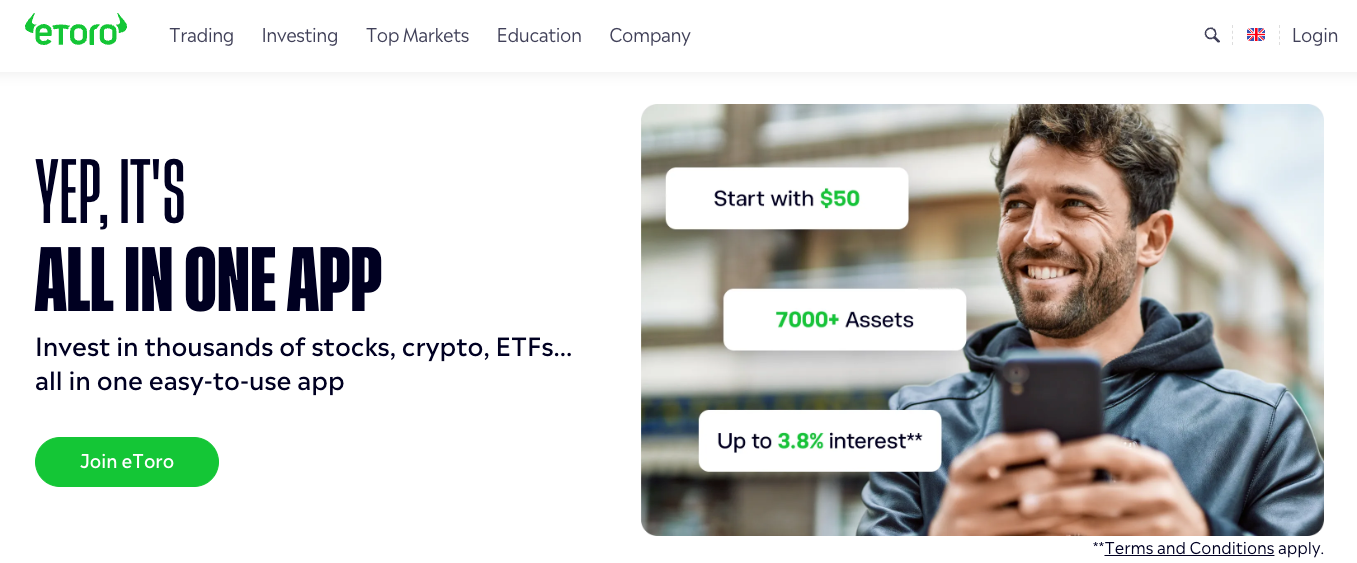
Is eToro good for beginners?
Yes. eToro is one of the best investing platforms for beginners, thanks to its intuitive app, commission-free stock investing, demo trading account, and CopyTrader feature. However, new UK users should be aware of FX fees, the lack of a SIPP, and higher ISA charges compared with some competitors. It’s excellent for learning, experimenting, and building confidence before moving to more advanced platforms.
Key info table
| Feature | Details |
|---|---|
| FCA Regulated | Yes |
| Minimum Deposit | $50 (GBP accepted) |
| Stock & ETF Fees | Commission-free |
| Withdrawal Fee | $5 |
| FX Fee | Applies to GBP/USD conversion |
| ISA Available | Yes (via Moneyfarm; higher fees) |
| Crypto Support | Yes (120+ assets) |
| Copy Trading | Yes (CopyTrader) |
| Demo Account | Yes, $100,000 virtual funds |
| FSCS Protection | Up to £85,000 (non-crypto) |
How much does this investment platform charge in fees and costs?
eToro offers commission-free stock and ETF investing, but beginners should watch FX conversion fees, a $5 withdrawal fee, and slightly wider spreads on crypto and CFDs. For UK users depositing in GBP, conversion costs apply when trading USD-denominated assets, though eToro’s GBP wallet helps reduce this.
How safe is this platform and is it fully FCA regulated?
Yes. eToro (UK) Ltd is fully FCA-regulated, meaning client funds are held in segregated accounts and eligible for FSCS protection up to £85,000 if the firm fails. This does not protect you from market losses. The platform also uses 2FA security, encryption, and strong operational controls suitable for beginner investors.
What assets can I invest in on this platform?
eToro gives beginners access to stocks, ETFs, crypto, commodities, indices, and CFDs, plus Smart Portfolios and copy trading. UK users can also access ISAs (via Moneyfarm) with options for cash, managed portfolios, and DIY stock/ETF investing.
How easy is the platform to use for everyday investing?
eToro is one of the easiest platforms for beginners, with clean menus, fast search tools, and simple order screens. The mobile investment app includes watchlists, analyst views, price alerts, educational videos, and TradingView charting. Navigation feels similar to a social app, making it approachable for first-time investors.
Who is this platform best for?
eToro is best for beginners, casual investors, and anyone who wants to learn through copy trading. It’s ideal for new investors who value simplicity, mobile-first design, and access to crypto. Long-term investors seeking the cheapest ISA fees or advanced traders may prefer alternatives like XTB, IG, or Vanguard.
What account types does this investment platform offer?
- General investment account
- Demo account with $100,000 virtual balance
- Stocks and Shares ISA (DIY or managed)
- Cash ISA (competitive rates)
- No SIPP available
Read the complete eToro review here.
Pros and cons
Pros
- Commission-free stock and ETF investing
- Extremely beginner-friendly interface
- CopyTrader allows passive, educational investing
- Strong crypto selection
- Great demo account for practising
- Excellent mobile app and charts (TradingView)
Cons
- FX fees on GBP to USD conversion
- $5 withdrawal fee
- No SIPP
- ISA fees higher than competitors
- Some assets (like UK bonds/funds) only available via Moneyfarm
- CFDs are high risk and unsuitable for most beginners
2. IG – Best for advanced investors and in-depth research tools
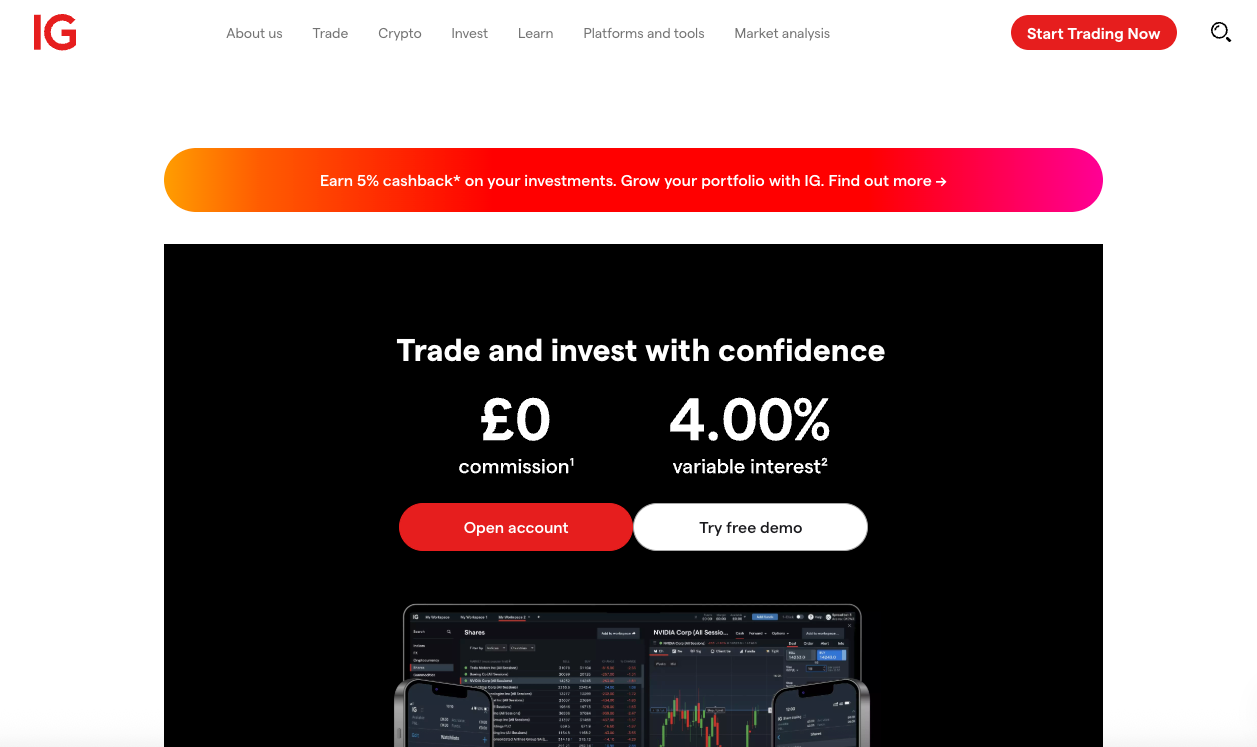
Is IG good for beginners?
Yes. IG can suit beginners who want a trusted, FCA regulated investment platform with strong education and deep market access, but it is more feature rich than simple beginner platforms. It tends to work best for beginners who want to learn, use an ISA or managed portfolios, and are comfortable with a platform that feels more professional.
Key info table
| Feature | Details |
|---|---|
| FCA Regulated | Yes |
| Minimum Deposit | £0 (bank transfer) |
| Stock & ETF Fees | £0 commission (online) |
| Withdrawal Fee | £0 |
| FX Fee | 0.7% on international trades |
| ISA Available | Yes (Share Dealing & Smart Portfolio) |
| Crypto Support | No crypto derivatives (UK retail) |
| Copy Trading | No |
| Demo Account | Yes |
| FSCS Protection | Up to £85,000 |
How much does this investment platform charge in fees and costs?
IG’s core investing costs are competitive for online investors: no account opening fee, no online trading commission, and no standard withdrawal fee. The key ongoing charge is the £24 quarterly custody fee, which is waived if three or more trades are placed in the quarter or if £15,000 or more is held in a Smart Portfolio. International investments also carry a 0.7% FX fee.
How safe is this platform and is it fully FCA regulated?
IG operates in a strong FCA regulated environment and is widely viewed as a long established UK provider. Client money protections and operational controls are central to its investment offering, and eligible clients may have FSCS protection up to £85,000. Investments are not guaranteed and values can fall as well as rise, so protection does not remove investment risk.
What assets can I invest in on this platform?
IG is built around share and ETF investing, with access to 11,000+ shares and ETFs and broader market coverage across thousands of markets. Investors can choose DIY investing via the web based share dealing platform, use the IG Invest app, or pick managed options such as Starter Portfolios and Smart Portfolios designed around different risk levels and diversification.
How easy is the platform to use for everyday investing?
IG’s investing tools are powerful and research led, which benefits investors who want analysis, order controls, and a wide selection. The IG Invest app is positioned as user friendly for managing portfolios on the move, while the web platform offers more depth. The trade off is complexity, as beginners who only want a very simple interface may find the platform busy at first.
Who is this platform best for?
IG is best for:
- Investors who value research, order types, and broad share and ETF access
- Advanced investors and frequent share traders who want deep tools and wide choice
- Beginners who want to learn and are comfortable with a more professional platform
- ISA and SIPP investors who want DIY control or ready made portfolios
What account types does this investment platform offer?
- General Investment Account (GIA)
- Stocks & Shares ISA (Share Dealing or Smart Portfolio)
- SIPP (pension)
- Smart Portfolio accounts
- Demo account
- Spread betting & CFD trading accounts
- No Lifetime ISA or Junior ISA
Read the complete IG review here.
Pros and cons
Pros
- Trusted, long established FCA regulated investment platform
- No online trading commission for shares
- Very wide share and ETF selection, plus managed portfolio options
- Strong education and research focus
- Standard withdrawals are free
Cons
- £24 quarterly custody fee unless activity or Smart Portfolio threshold is met
- More complex than beginner only investment platforms
- 0.7% FX fee on international investments
- High charges for phone dealing
- Card deposits require £500 minimum
3. XTB – Best for low-cost active investing and commission-free stocks
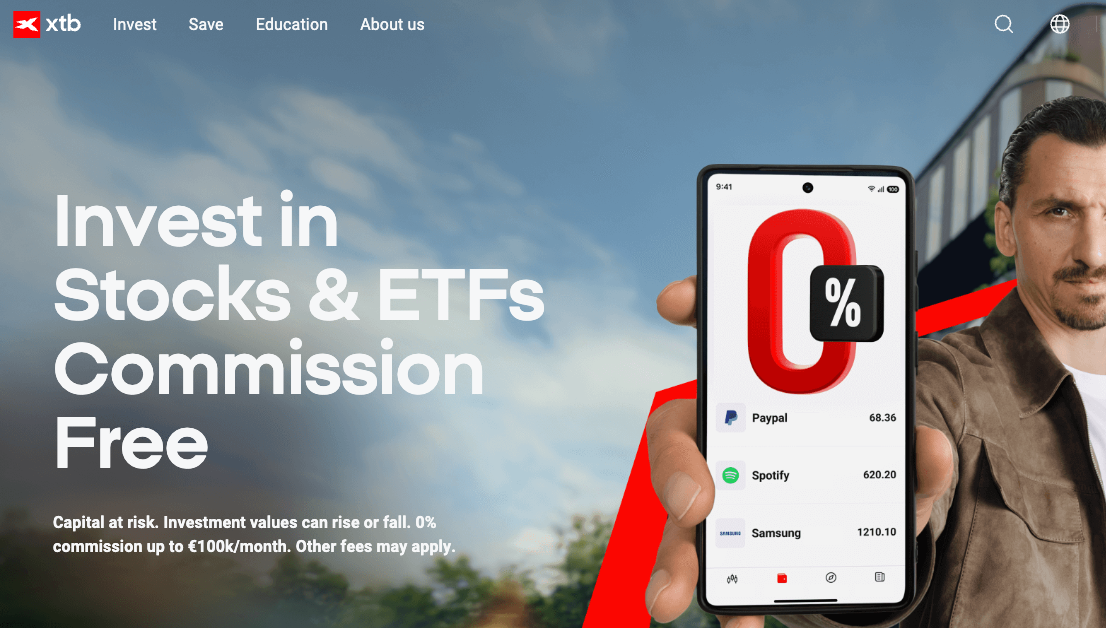
Is XTB good for beginners?
Yes. XTB is a strong low-fee platform for beginners thanks to commission-free stock and ETF investing, a user-friendly ISA, and excellent educational tools. UK users can invest from £0 with no platform fees, and XTB pays high interest on uninvested cash. However, the platform can feel complex for complete beginners and it does not offer a SIPP.
Key info table
| Feature | Details |
|---|---|
| FCA Regulated | Yes |
| Minimum Deposit | £0 |
| Stock & ETF Fees | £0 up to €100k monthly volume |
| Withdrawal Fee | £0 above £50 (£5 below) |
| FX Fee | 0.5% |
| ISA Available | Yes (free Stocks & Shares ISA) |
| Crypto Support | No crypto derivatives |
| Copy Trading | No |
| Demo Account | Yes (30 days, £85k virtual funds) |
| FSCS Protection | Up to £85,000 |
How much does this investment platform charge in fees and costs?
XTB offers commission-free stock and ETF trading for monthly volumes under €100,000, making it extremely low-cost for most beginners. There are no account or platform fees and UK withdrawals above £50 are free. FX conversions cost 0.5%, and a £10 inactivity fee applies after 12 months without a trade. Shares above the €100k limit incur a 0.2% fee.
How safe is this platform and is it fully FCA regulated?
Yes. XTB is fully regulated by the FCA under XTB Limited and client funds are held in segregated accounts with FSCS protection up to £85,000. The parent company is publicly listed on the Warsaw Stock Exchange, adding transparency and credibility. Security includes encrypted accounts, two-step login options and strict adherence to UK client-money rules.
What assets can I invest in on this platform?
XTB offers access to more than 6,600 global stocks, 1,800+ ETFs, and thousands of CFDs covering indices, commodities, forex, and cryptocurrencies (CFD crypto not available for UK retail). It also offers automated ETF-based “Investment Plans,” interest-earning cash, and a growing range of global markets. There are no mutual funds or bonds.
How easy is the platform to use for everyday investing?
The XTB app is modern, clean and fast, with simple trade screens, real-time pricing, watchlists, and category filters for popular, tech, dividend and UK shares. Beginners may initially find the mix of real stocks and CFD markets confusing, but the navigation becomes easier with use. The xStation platform is powerful, with alerts, indicators and market news built in.
Who is this platform best for?
XTB is best for fee-conscious beginners, ISA investors, and anyone wanting commission-free investing with strong educational support. It also suits active traders who want fast execution and more advanced charting. It’s less suitable for investors needing a SIPP or those wanting a simpler, beginner-only interface.
What account types does this investment platform offer?
- General Investment Account (GIA)
- Stocks & Shares ISA (free platform fee)
- Standard trading account
- Demo account (30 days)
- No SIPP available
Read the complete XTB review here.
Pros and cons
Pros
- Commission-free stocks and ETFs up to €100k monthly volume
- Free, flexible Stocks & Shares ISA
- High interest on uninvested cash (up to 4.25% GBP)
- Easy account opening with no minimum deposit
- Strong educational content, courses and webinars
- Modern, fast xStation 5 platform
Cons
- No SIPP option
- Platform can be confusing for complete beginners
- 0.5% FX conversion fee on international shares
- £10 inactivity fee after 12 months
- No mutual funds or bonds
4. AJ Bell – Best for long-term ISA and SIPP investors
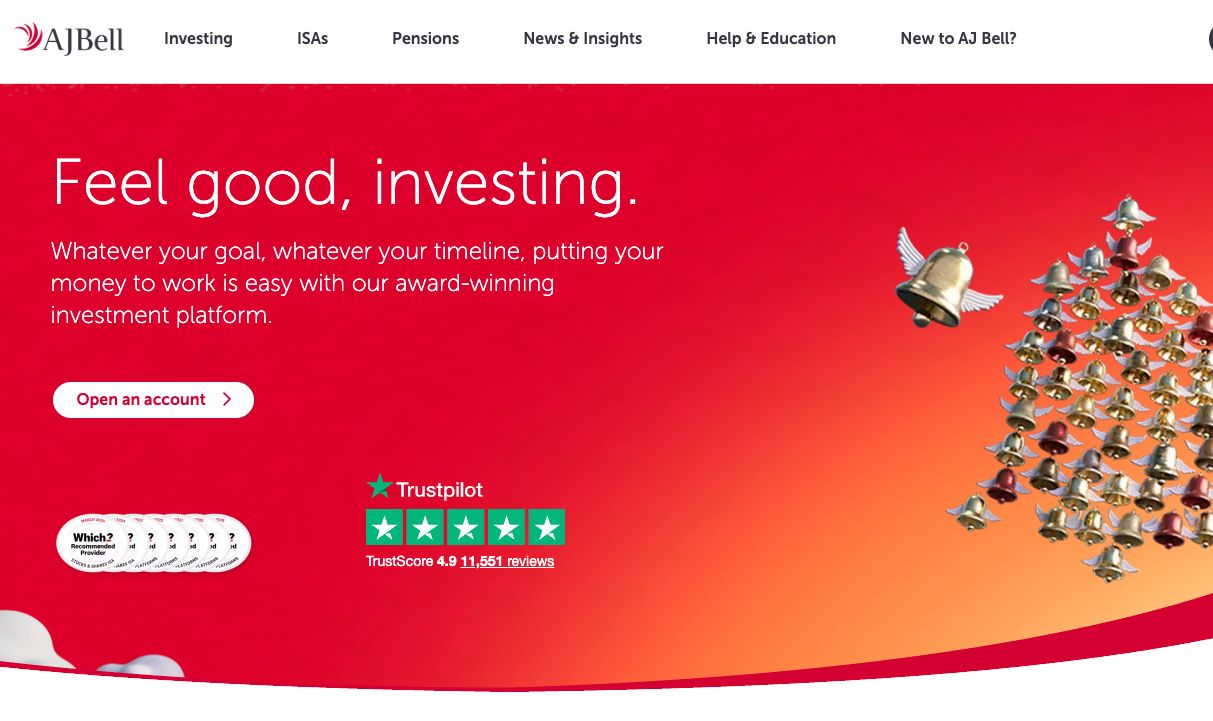
Is AJ Bell good for beginners?
Yes. AJ Bell is one of the best all-round investment platforms for beginners thanks to low percentage-based fees, a wide investment choice, strong research tools, and excellent customer support. It offers ISAs, SIPPs, LISAs and GIAs, making it ideal for long-term investors. However, dealing fees can add up and it does not offer fractional shares or crypto.
Key info table
| Feature | Details |
|---|---|
| FCA Regulated | Yes |
| Minimum Deposit | £25 monthly or £500 lump sum |
| Stock & ETF Fees | £5 per trade (or £3.50 with frequent trader discount) |
| Fund Fees | £1.50 per deal |
| FX Fee | From 0.75% |
| ISA Available | Yes (Stocks & Shares ISA, JISA, LISA) |
| SIPP Available | Yes |
| Crypto Support | No |
| Copy Trading | No |
| Demo Account | No |
| FSCS Protection | Up to £85,000 |
How much does this investment platform charge in fees and costs?
AJ Bell charges an annual platform fee of 0.25% up to £250k, 0.10% up to £500k, and no fee above £500k. Share dealing costs £5 per trade, or £3.50 for active traders. Fund trades cost £1.50, and FX fees start at 0.75%. There are no withdrawal fees, but costs can add up for frequent traders.
How safe is this platform and is it fully FCA regulated?
Yes. AJ Bell is fully FCA-regulated and client funds are protected up to £85,000 via FSCS. The company is publicly listed on the London Stock Exchange, adding strong transparency and financial stability. Security features include two-factor authentication, encrypted accounts and segregated client money.
What assets can I invest in on this platform?
AJ Bell offers more than 20,000 investment options, including UK and international shares, ETFs, funds, investment trusts, gilts and bonds. It also provides ready-made portfolios, AJ Bell funds and ethical investment filters. Crypto and CFDs are not supported.
How easy is the platform to use for everyday investing?
AJ Bell’s website and app are clean, reliable and easy to navigate. The platform includes watchlists, live pricing, market news, research tools and portfolio analysis. It’s slightly more traditional than app-based brokers, but it’s well-structured, intuitive and suitable for both beginners and experienced investors.
Who is this platform best for?
AJ Bell is best for beginner and long-term investors, especially those using ISAs or SIPPs. It suits cost-conscious investors who prefer percentage-based fees on smaller portfolios. Active traders wanting cheaper share dealing, or investors who want fractional shares or crypto, may prefer eToro, XTB or Trading 212.
What account types does this investment platform offer?
- Stocks & Shares ISA
- Lifetime ISA
- Junior ISA
- Self-Invested Personal Pension (SIPP)
- Junior SIPP
- General Investment Account
- Cash Savings Hub
- Ready-made portfolios
Read the complete AJ Bell review here.
Pros and cons
Pros
- Low annual platform fees for most investors
- Huge investment selection (20,000+ assets)
- Full range of ISAs and SIPP
- Excellent research, education and tools
- Pays interest on uninvested cash
- Highly rated customer service
Cons
- £5 share-dealing fee can add up
- FX fees higher than some competitors
- No fractional shares
- No crypto trading
- Fund trades cost £1.50
5. InvestEngine – Best for low-cost ETF investing and simple portfolios
Is InvestEngine good for beginners?
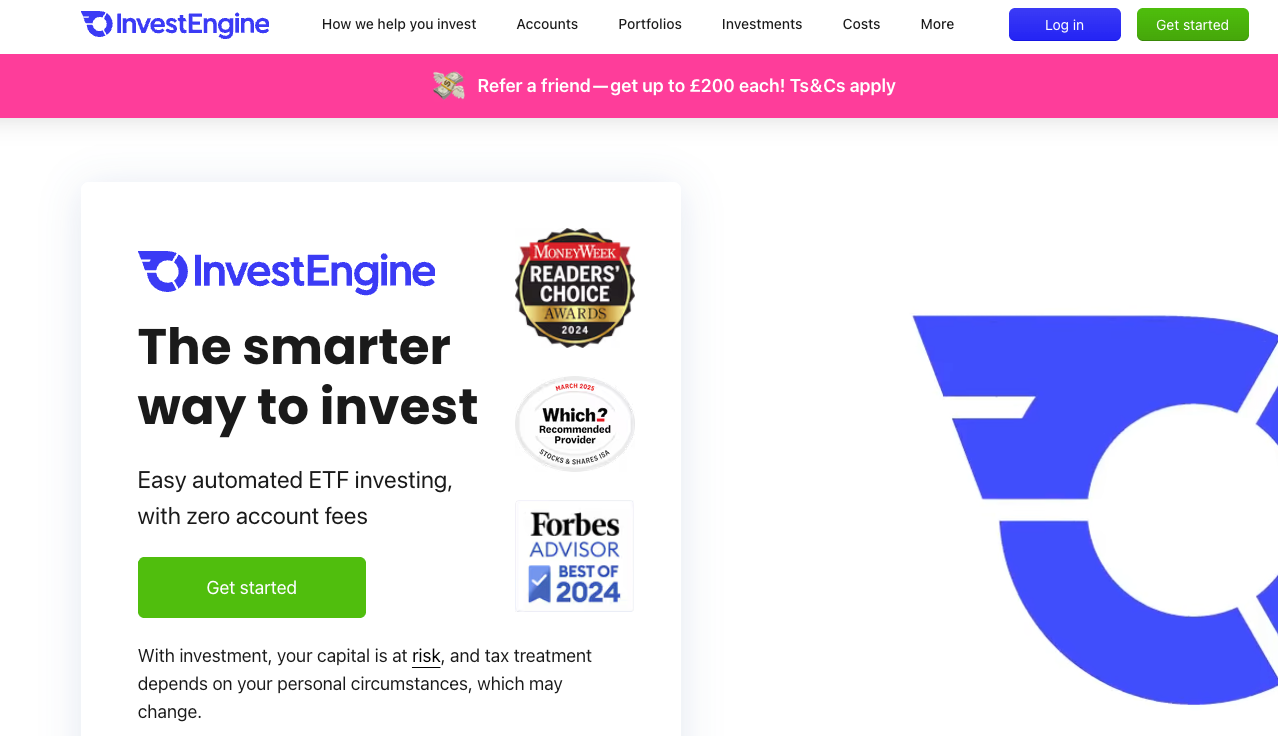
Yes. InvestEngine is one of the best low-cost platforms for beginners thanks to zero platform fees, commission-free ETF investing, and a very simple interface. It’s ideal for long-term, hands-off ETF investors who want the lowest possible costs. However, InvestEngine only offers ETFs, has no phone support, and doesn’t support single-stock investing.
Key info table
| Feature | Details |
|---|---|
| FCA Regulated | Yes |
| Minimum Deposit | £100 (ISA), £0 for DIY GIA |
| ETF Fees | No dealing fees |
| Platform Fee | £0 for DIY portfolios |
| Managed Fee | 0.25% + ~0.12% ETF costs |
| ISA Available | Yes (Flexible ISA) |
| SIPP Available | Yes |
| Crypto Support | No |
| Copy Trading | No |
| Demo Account | No |
| FSCS Protection | Up to £85,000 |
How much does this investment platform charge in fees and costs?
InvestEngine charges no platform fees and no trading fees for DIY ETF portfolios, making it one of the cheapest investment platforms in the UK. Managed portfolios cost 0.25%, plus underlying ETF fees averaging 0.12%. There are no withdrawal fees, and no FX fees because all ETFs trade in GBP on the platform.
How safe is this platform and is it fully FCA-regulated?
Yes. InvestEngine is fully FCA-regulated and eligible for FSCS protection up to £85,000 per person. Client assets are ring-fenced and safeguarded, and the platform uses two-factor authentication and encrypted account access. Although newer than established providers, it is considered safe and has grown quickly.
What assets can I invest in on this platform?
InvestEngine is an ETF-only platform, offering 760+ ETFs across equity markets, bonds, commodities, ESG funds and thematic sectors. Users can build DIY portfolios, invest using fractional ETF units, or choose a managed LifePlan or risk-based ready-made portfolio. There are no individual shares, mutual funds, bonds or trusts.
How easy is the platform to use for everyday investing?
InvestEngine is simple, clean and easy to use on both desktop and mobile. The layout is uncluttered, investing is guided by portfolio tools, and the analytics tab helps beginners understand exposures and performance. However, its ETF-only approach and portfolio-first investing flow can feel unusual at first compared with traditional brokers.
Who is this platform best for?
InvestEngine is best for beginners, cost-conscious investors, and anyone who wants a simple ETF-only portfolio. It suits long-term, passive investors aiming for diversification at the lowest cost. It is less suitable for experienced stock pickers, short-term traders, or investors needing phone-based customer support.
What account types does this investment platform offer?
- General Investment Account (GIA)
- Stocks & Shares ISA (Flexible ISA)
- Self-Invested Personal Pension (SIPP)
- Business investing account
- Managed and DIY ETF portfolios
- No Lifetime ISA or Junior ISA
Read the complete InvestEngine review here.
Pros and cons
Pros
- Zero platform fees for DIY portfolios
- Commission-free ETF investing
- Very low ongoing costs
- Wide selection of 700+ ETFs
- Simple interface ideal for beginners
- Flexible ISA available
- Fractional ETF investing
- Strong customer satisfaction ratings
Cons
- Only offers ETFs (no shares, funds or trusts)
- £100 minimum for ISA investments
- No telephone support
- Newer platform with shorter history
- Not suitable for active traders or stock pickers
How do investment platforms work?
Investment platforms let you buy, hold and manage investments online through a single account. They provide access to shares, ETFs, funds and other assets while handling custody, reporting and order execution. Fees vary by provider and account type. Most UK platforms are FCA-regulated and eligible for FSCS protection.
What should you look for in an investment platform?
The right investment platform should be FCA regulated, transparent on fees, easy to use, and suited to your experience level and goals. UK investors should prioritise safety, clear pricing, market access, and reliable tools so they can invest confidently without unnecessary costs or complexity.
Regulation and investor protection
A trustworthy platform should be authorised or registered with the FCA. This helps ensure rules on client money, transparency, and conduct are followed. For investments like shares and ETFs, check whether FSCS protection up to £85,000 applies. Crypto assets are not FSCS protected, which should be clearly stated.
Fees and charges
Look for platforms with clear, upfront fees. Common costs include trading commissions, spreads, FX fees on non GBP assets, and inactivity charges. Lower fees matter most for frequent traders, while long term investors should focus on ongoing costs like platform or custody fees.
Ease of use and platform design
An investment platform should be easy to navigate, especially for beginners. Clear dashboards, simple order placement, and readable portfolio views reduce mistakes. Mobile access is important, but desktop tools should also be stable and responsive.
Available assets and markets
Check that the platform supports the assets you want to invest in, such as UK and US shares, ETFs, funds, or crypto. Some platforms specialise in long term investing, while others focus on active trading. Asset coverage should match your strategy.
Account types and features
UK users may benefit from ISAs or general investment accounts depending on tax goals. Useful features include dividend tracking, recurring investments, price alerts, and basic research tools. Advanced tools matter more for active investors than beginners.
Deposits, withdrawals, and payments
Reliable platforms support UK bank transfer, Faster Payments, and debit cards. Deposits should be fast and withdrawals straightforward, with clear timelines and no hidden charges.
Customer support and reputation
Good platforms offer responsive customer support and a strong track record. Reviews, years in operation, and transparent ownership all help indicate reliability. A platform should make it easy to get help if something goes wrong.
Quick check: A strong investment platform combines FCA oversight, fair fees, suitable assets, and an interface that fits your experience level.
What product and investment range do investing platforms offer?
UK investing platforms can offer anything from a small, focused product range to tens of thousands of global investments. Most platforms provide access to UK and international shares, ETFs, investment funds, and investment trusts, while some also include bonds, gilts, commodities exposure, and ready-made portfolios.
Platforms with a broad range allow experienced investors to build highly customised portfolios across regions and asset classes, while simpler platforms deliberately limit choice to reduce complexity.
ETF-only platforms suit low-cost, passive investors who want diversification with minimal effort, whereas full-service brokers cater to investors who want maximum flexibility and control.
Which tax wrappers can you use on an investment platform?
Most UK investment platforms support multiple tax wrappers to help investors reduce or eliminate tax on returns. The most common options are the Stocks and Shares ISA, Self-Invested Personal Pension (SIPP), Lifetime ISA, and Junior ISA, each with specific annual allowances and rules.
Platforms also offer a General Investment Account (GIA) for investing outside tax wrappers, which has no contribution limits but exposes gains, dividends, and interest to taxation. Choosing the right wrapper can significantly improve long-term outcomes, which is why many investors prioritise ISA or pension allowances before using a GIA.
What type of investing platform should you choose?
The right investing platform depends on how involved you want to be and how confident you are making decisions.
DIY platforms suit investors who want to choose their own shares, ETFs, or funds, while ready-made or managed portfolio platforms are designed for people who prefer a hands-off approach.
Low-cost ETF platforms appeal to long-term investors focused on minimising fees, while full-service brokers suit investors who want research tools, wider asset choice, and more advanced features.
There is no universally “best” platform, only the one that best fits your experience level, goals, and preferred investing style.
What type of investor are you?
Your investor type is shaped by your goals, time horizon, and tolerance for risk. Beginners often prioritise simplicity, low fees, and diversification, making ready-made portfolios or broad ETFs a good fit. These options reduce decision-making and help manage risk over time.
More confident investors may prefer to pick individual shares, rebalance portfolios actively, or use specialised tools and research. Understanding your own comfort level with volatility and complexity is key to choosing a platform that supports your investing journey rather than overwhelming it.
Do you pay tax on profits made through a investing platform?
Tax depends entirely on the account type used. Investments held inside a Stocks and Shares ISA or SIPP grow free from capital gains tax and dividend tax, making them highly efficient for long-term investing. Pensions also benefit from tax relief on contributions, though access is restricted until retirement age.
Outside tax wrappers, profits may be subject to capital gains tax, dividend tax, or income tax, depending on the type of return and your personal allowances. This is why many UK investors aim to use ISA and pension allowances before investing through a general investment account.
How we test investment platforms in the UK
UK investment platforms are reviewed using a structured, hands on assessment that scores each provider on security, fees and charges, ease of use, available investments, account types, and customer support.
Each category is rated from 1 to 5 based on live account testing, real investing activity, and verification of all core platform features. Reviews prioritise FCA regulation, pricing transparency, platform stability, and suitability for beginners as well as long term investors.
Scoring is informed by hands on web and app usage, comparison of trading, platform and FX fees, testing of Stocks and Shares ISA, SIPP, and GIA functionality, and evaluation of research tools, portfolio features, deposits, withdrawals, and asset availability. This ensures recommendations reflect real investor experience rather than marketing claims.
Every review is independent, evidence based, and written to help UK users choose a safe and reliable investment platform.
For a full breakdown of our methodology, see our detailed guide on How We Test.
Conclusion
The best investment platforms in the UK give beginners a balance of low fees, clear tools and strong long-term flexibility.
If you want the simplest, most beginner-friendly experience, eToro stands out for its easy app, commission-free stocks and CopyTrader learning tools.
For low-cost, long-term ETF investing, InvestEngine is one of the strongest options with zero platform fees for DIY portfolios. And if you want a broad product range with ISAs, SIPPs and excellent research, AJ Bell remains a reliable, good-value choice.
Each platform suits a different style of investor, so the right pick comes down to how hands-on you want to be, how much you plan to invest, and which features matter most as you build your portfolio in 2026.
FAQs
Which platform is good for investing in funds?
AJ Bell is one of the strongest UK choices for investing in funds because it offers a broad range of fund types and long term account wrappers like ISAs and SIPPs. It suits beginners who want traditional fund investing, portfolio building tools, and a platform designed for long term planning rather than short term trading.
What is the best platform for UK newbie investor?
For most UK newbies, eToro is the best starting point because it is easy to learn, has simple navigation, and offers commission free stock investing with beginner friendly features like a demo account and copy investing. It suits first time investors who want a smooth learning curve, but ISA and FX costs should be checked carefully.
What is the cheapest investment platform in the UK?
InvestEngine is often the cheapest for long term investing if the goal is a low cost ETF portfolio, because DIY investing can come with zero platform fee and no dealing fees on ETFs. XTB can also be very low cost for DIY stocks and ETFs, but FX fees and activity rules matter depending on usage.
What are the best managed investment platforms UK?
For managed investing, look for platforms offering ready made portfolios matched to risk level and clearly stated ongoing charges. In this comparison, IG Smart Portfolios suit investors who want a recognised brand and managed diversification, while InvestEngine managed portfolios suit low cost ETF based management. eToro also offers portfolio style products for hands off investing.
What is the best platform to invest your money on?
The best platform depends on the investing style. eToro is best for learning and getting started, InvestEngine is best for keeping ETF costs down, AJ Bell is best for long term wrappers and fund choice, IG is best for research led investing, and XTB is best for low cost DIY investing for users comfortable with a more advanced layout.
What investment platform is good for beginners?
A good beginner platform should be FCA regulated, simple to navigate, clear on fees, and supportive with education or guided portfolios. eToro is a strong beginner choice for usability and learning features. InvestEngine is beginner friendly for ETF only portfolios. AJ Bell suits beginners who want a more traditional long term investing experience with funds, ISAs, and pensions.
What are the best investment platforms UK for long term?
For long term investing, platforms that offer ISAs and SIPPs, broad investment choice, and reasonable ongoing fees tend to work best. AJ Bell suits long term planners and retirement investors. InvestEngine suits long term ETF investors focused on low costs. IG suits long term investors who want research, market depth, and the option of managed portfolios alongside DIY investing.
Are investment platforms safe in the UK?
They can be, if they are FCA regulated and follow client money rules. Safety also depends on using sensible diversification and understanding that investments can fall in value.
Which platforms have the best ready made investment portfolios?
The UK platforms with the best ready made investment portfolios are IG, InvestEngine, and AJ Bell. These providers offer diversified portfolios matched to risk level, built using ETFs or funds, and are fully FCA regulated, making them suitable for hands off and beginner investors.
What is the best investment platform for large investments?
For large investments, AJ Bell and IG are among the best options due to their tiered fee structures, wide asset coverage, and strong ISA and SIPP support. Both platforms reduce percentage fees as portfolio size grows and are designed for long term, higher value portfolios.
What is the best investment strategy for beginners?
The best investment strategy for beginners is long term, diversified investing using ETFs or ready made portfolios aligned to risk tolerance. Using tax wrappers like a Stocks and Shares ISA, investing regularly, and avoiding short term trading helps reduce risk and smooth market volatility over time.
What is the best investment platform in the UK that also pays interest on cash?
XTB is one of the best UK investment platforms that pays interest on uninvested cash, with competitive GBP rates while funds remain accessible. It is FCA regulated, offers commission free stocks and ETFs, and suits cost conscious investors who want idle cash to earn interest.
Best private platform for alternative investments?
For private and alternative investments, platforms like Seedrs and Crowdcube are leading UK options. These platforms focus on private equity, startups, and early stage businesses, carry higher risk, and are not covered by FSCS in the same way as listed investments.
References
- https://www.fca.org.uk/publications/market-studies/ms17-1-investment-platforms-market-study
- https://www.fca.org.uk/firms/investment-platforms-consumers-investment-costs-good-poor-practice
- londonstockexchange.com/resources/equities-trading-resources
- https://commonslibrary.parliament.uk/the-rise-of-armchair-retail-trading-risks-and-regulation