

The best ETF platforms in the UK in 2026 offer low fees, simple tools and FCA-regulated access to diversified funds.
This guide compares the top providers so you can choose a safe, cost-effective platform that fits your investing style.
Each option is reviewed on fees, features and ease of use to help you make a confident decision.
Key takeaway: What’s the best ETF platform in the UK?
The best ETF platform in the UK is eToro, due to its beginner-friendly app, £0 commission on real ETFs and strong social-investing tools that help new investors learn quickly.
For those prioritising the lowest long-term costs, InvestEngine is the best value option, while AJ Bell and XTB remain strong choices for ISAs/SIPPs and active ETF traders.
Best ETF platforms: how do they compare?
| Platform | Costs & fees | ETF range | Ease of use | Best for |
|---|---|---|---|---|
| eToro | £0 commission on real ETFs; FX fees on non-GBP assets | 300–700 ETFs | Extremely beginner-friendly app | New investors & social-copy learners |
| IG | £3 ETF trades; FX 0.5–0.7%; quarterly fee waived with 3+ trades | 3,000+ ETFs | Powerful platform; best for confident users | Advanced ETF traders & analysts |
| XTB | £0 ETF commissions up to monthly limits; spreads & FX apply | 1,300+ ETFs | Fast, pro-level xStation 5 | Active ETF traders wanting tools |
| AJ Bell | £5 ETF trades; custody capped at £42 (ISA/GIA) | ~4,000 ETFs | Clear platform; basic app | ISA/SIPP investors wanting choice & research |
| InvestEngine | £0 DIY ETF fees; £0 ISA/SIPP platform fee; 0.25% on managed portfolios | 700+ ETFs | Very simple; strong automation | Cheapest ETF investing & long-term portfolio builders |
Top 5 ETF platforms – best for
- eToro – Best for beginners and social investing
- IG – Best for advanced ETF traders who want deep tools
- XTB – Best for active ETF traders who want pro-grade speed
- AJ Bell – Best for long-term ISA and SIPP ETF portfolios
- InvestEngine – Best for ultra-low-cost ETF investing
UK ETF trading broker reviews
These reviews highlight the leading FCA regulated platforms for buying and managing ETFs in the UK, with a focus on fees, tools and beginner friendly features.
1. eToro – Best for beginner ETF investors who want social features and an easy app
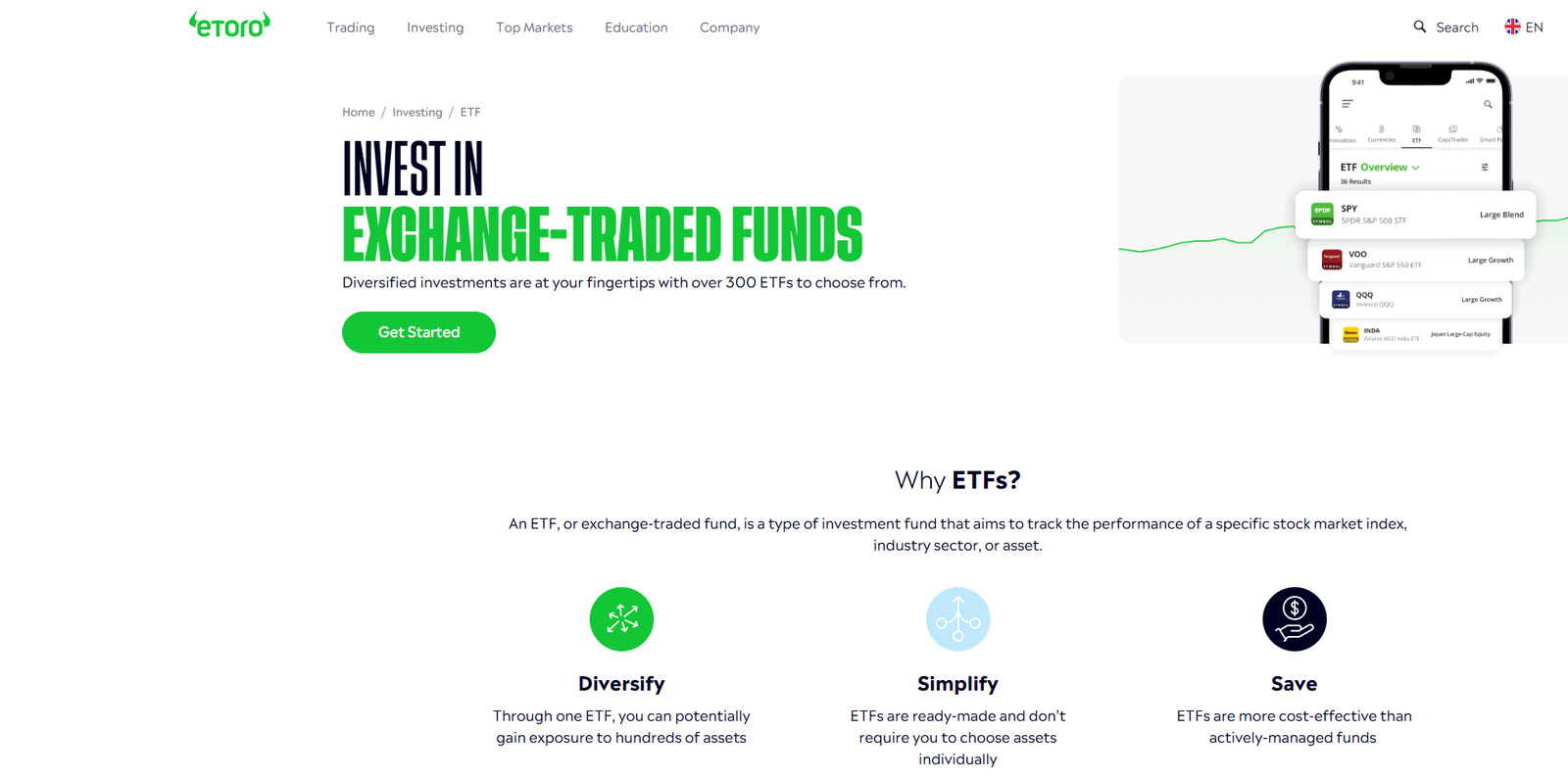
Should you use eToro to trade ETFs?
eToro is a strong choice for beginners who want simple ETF investing with social tools. It offers £0 commission on real ETFs, a clean interface and the ability to copy experienced investors. However, the ETF range is smaller than on traditional brokers and FX fees apply on non-GBP trades, so active ETF traders may prefer deeper platforms.
Key info table
| Factor | eToro summary |
|---|---|
| Fees & Charges | £0 commission on real ETFs; FX fees apply; $5 withdrawal fee |
| Inactivity Fee | $10 per month after 12 months of no activity |
| Ease of Use | Extremely beginner-friendly with a simple, mobile-first interface |
| Account Types | Standard trading account; ISA available through Moneyfarm |
| ETF Range | Around 300–700 ETFs depending on region; enough for beginners |
| Tools & Research | CopyTrader, Smart Portfolios, basic charts, social insights |
How low are the trading fees and ongoing ETF costs on eToro?
eToro’s real ETF investing costs are low, with £0 commission on ETF purchases. FX conversion fees apply when trading non-GBP assets, and there is a $5 withdrawal fee. eToro does not charge custody fees, but an inactivity fee applies after 12 months.
This makes eToro cheap for casual investing but costlier for those who withdraw often or hold USD-based ETFs.
How easy is eToro to use for buying and managing ETFs?
eToro is one of the easiest ETF platforms for UK beginners. The investment app is clean, mobile-first, and removes complexity by combining investing, social insights and portfolio tools in a single screen.
You can buy ETFs in a few taps, follow other investors, and access a demo account before using real money.
What account types and tax wrappers does eToro support?
eToro offers a standard investing account and access to a Stocks and Shares ISA through its partnership with Moneyfarm. ISA balances can be viewed within eToro, but the underlying portfolio is run by Moneyfarm. eToro does not offer a SIPP, so it’s less suitable for long-term retirement investing.
How broad is the ETF range and does it include global, thematic and bond ETFs?
eToro provides access to 300–700 ETFs, depending on region. The range covers major global indices, sectors, thematic ETFs, commodities and bond ETFs. While enough for most beginners building diversified portfolios, it’s smaller than traditional UK brokers offering thousands of ETFs.
How strong are eToro’s research tools, screeners and automation features?
Research tools focus on ease over depth. You get CopyTrader, Smart Portfolios, a social newsfeed, basic charting, watchlists, analyst sentiment and market commentary. These tools help beginners learn and copy strategies, but lack the advanced charting, automation and deep data offered by pro-level platforms.
Who is eToro best for?
eToro is best for beginners, casual investors, and those who want to learn from others through social investing.
It’s also suitable for users who prefer a simple mobile experience. More advanced ETF investors who need deeper analytics or broader ETF coverage may prefer IG, XTB or AJ Bell.
Pros & cons
Pros
- £0 commission on real ETFs
- CopyTrader and Smart Portfolios for easy learning
- User-friendly mobile and desktop platforms
- ISA available via Moneyfarm
- FCA regulated
Cons
- FX fees on non-GBP ETFs
- Smaller ETF selection than traditional brokers
- $5 withdrawal fee
- Monthly inactivity fee after 12 months
2. IG – Best for advanced ETF traders who want deep market access and pro-level tools
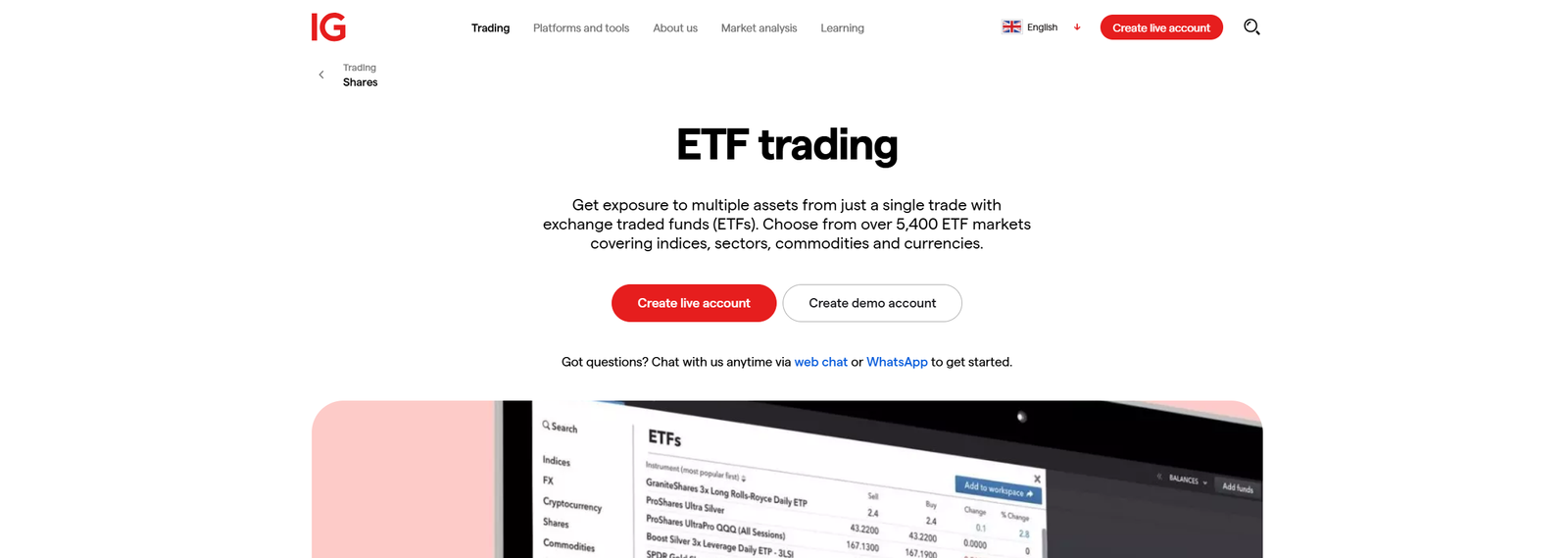
Should you use IG to trade ETFs?
Yes, if you want depth, speed and professional-grade tools. IG is one of the strongest ETF platforms for active investors thanks to its huge market coverage and advanced analytics. However, if you trade only occasionally or prefer a simpler, lower-fee experience, a beginner-friendly platform may be a better fit.
Key info table
| Factor | IG summary |
|---|---|
| Fees & Charges | £3 ETF trades, FX 0.5–0.7%, quarterly fee waived with 3+ trades |
| Inactivity Fee | None for investing; CFD accounts charged after long inactivity |
| Ease of Use | Powerful platform best suited to confident investors |
| Account Types | Share Dealing, ISA, SIPP |
| ETF Range | 3,000+ ETFs plus broad global ETF market access |
| Tools & Research | Advanced charts, screeners, analytics, market insights |
How low are the trading fees and ongoing ETF costs on IG?
IG’s ETF fees are competitive for active traders but can be higher for occasional investors. ETF trades cost £3 per deal, FX conversion is 0.5% (0.7% from April 2025), and the £24 quarterly platform fee is waived with three or more trades. No deposit or withdrawal fees apply.
How easy is IG to use for buying and managing ETFs?
IG is powerful and fast, but not the simplest for beginners. The desktop and trading app platforms offer clean deal tickets and intuitive execution, yet the abundance of tools, analytics, and indicators may feel overwhelming for new investors. Lack of fractional ETFs is another limitation for small portfolios.
What account types and tax wrappers does IG support?
IG supports all major UK tax wrappers: Share Dealing, Stocks and Shares ISA, and SIPP. Fees are identical across accounts, and you can invest in ETFs, managed Smart Portfolios (built with BlackRock iShares), and other global assets from the same dashboard.
How broad is the ETF range and does it include global, thematic and bond ETFs?
IG offers one of the largest ETF selections in the UK, with 3,000+ ETFs and access to 5,400 ETF markets for trading via CFDs or spread betting. Coverage includes global index funds, smart-beta, thematic strategies, commodity ETFs, sector ETFs and government or corporate bond ETFs.
How strong are IG’s research tools, screeners and automation features?
Research tools are a major strength. IG provides an advanced ETF screener, ProRealTime charting, automated strategies, custom indicators, market news, and extended-hours access. Serious ETF traders benefit from IG’s depth of analytics and institutional-style charting.
Who is IG best for?
IG is ideal for experienced ETF traders, frequent investors who want professional tools, and those who value a massive ETF selection and FCA-regulated reliability. Beginners or low-frequency investors may find cheaper and simpler options elsewhere.
Pros and cons
Pros
- Huge ETF range (3,000+ ETFs, 5,400 ETF markets)
- Professional-grade charts and tools
- FCA-regulated with strong security controls
- ISA and SIPP available
- £0 platform fee for active traders
Cons
- £24 quarterly fee for infrequent investors
- No fractional ETF investing
- More complex than beginner-focused apps
3. XTB – Best for low-cost ETF traders who want fast execution and a powerful platform
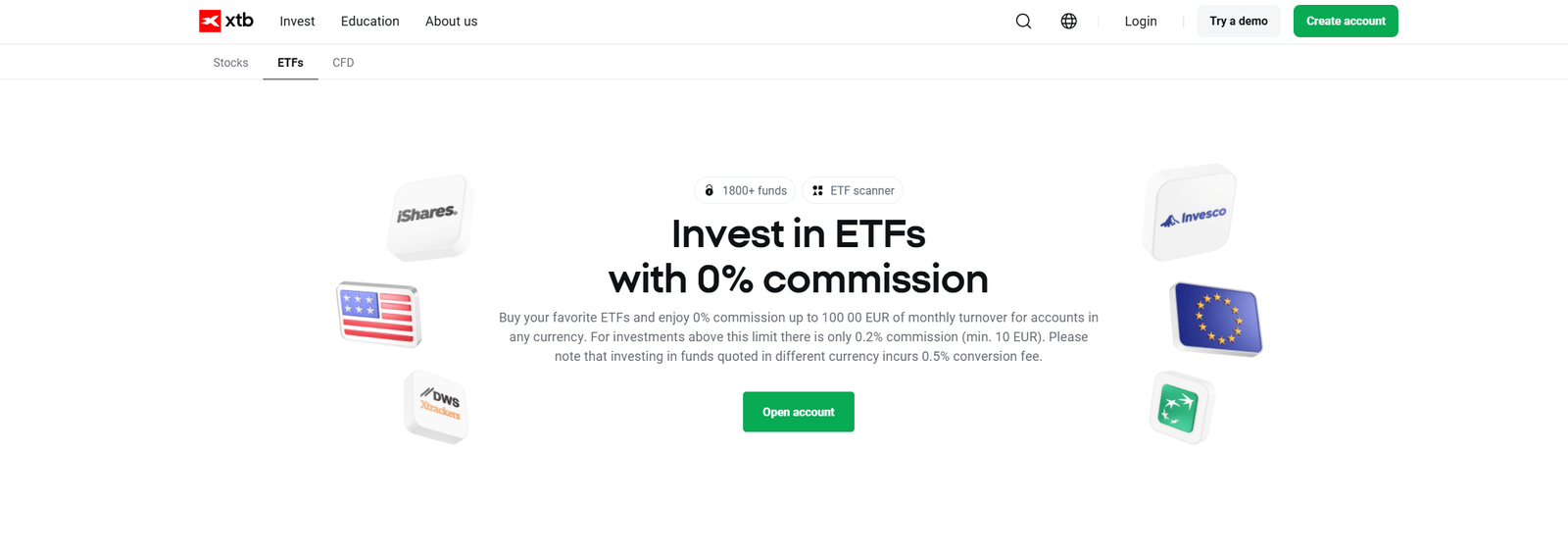
Should you use XTB for trading ETFs?
XTB is a strong choice for investors who want low trading costs and a fast, professional platform. It offers £0 commission on real ETFs up to a monthly limit and provides one of the best mobile and desktop platforms in the UK.
However, XTB lacks ISA and SIPP accounts and charges an inactivity fee after one year, making it better for active ETF investors than long-term passive savers.
Key info table
| Factor | XTB summary |
|---|---|
| Fees & Charges | £0 ETF commissions (limits apply), higher FX fees |
| Inactivity Fee | £10/month after one year of inactivity |
| Ease of Use | Fast, modern, highly intuitive through xStation 5 |
| Account Types | Standard account only; no ISA or SIPP |
| ETF Range | 1,300+ real ETFs plus ETF CFDs |
| Tools & Research | Advanced charts, heatmaps, screeners, education |
How low are the trading fees and ongoing ETF costs on XTB?
XTB offers highly competitive ETF fees. Real ETF investing is £0 commission up to a monthly trading cap (varies by region), and spreads are tight across ETFs and CFD products.
There is no fee for bank-transfer withdrawals above £50, though inactivity fees apply after 12 months. FX conversion costs may be higher than rivals.
How easy is XTB to use for buying and managing ETFs?
XTB’s xStation 5 platform is one of the most polished trading systems available. It offers fast execution, clean charts, flexible order types and a modern interface that works well for both beginners and experienced investors. The mobile app mirrors the desktop version, providing seamless ETF management on the go.
What account types and tax wrappers does XTB support?
XTB offers a standard investment account for trading and investing, but does not support UK tax wrappers such as ISAs or SIPPs. This limits its appeal for long-term buy-and-hold ETF investors who want to reduce tax on gains and dividends.
How broad is the ETF range and does it include global, thematic and bond ETFs?
XTB provides access to over 1,300–1,800 ETFs, depending on the region. This includes global equity ETFs, sector funds, thematic strategies, commodity ETFs and bond ETFs. It also offers ETF CFDs, allowing traders to speculate on price movements with leverage, though CFDs carry significant risk.
How strong are XTB’s research tools, screeners and automation features?
Research tools are one of XTB’s standout strengths. xStation 5 includes ETF screeners, heatmaps, economic calendars, technical indicators, market sentiment, risk calculators, and extensive educational materials. Although it lacks fully automated trading or backtesting, its charting and analytics are superior to most beginner and mid-level platforms.
Who is XTB best for?
XTB is best for cost-conscious ETF traders, active investors, and users who want a feature-rich platform without paying platform fees. It’s less suitable for passive long-term UK investors who need ISAs or SIPPs, and not ideal for those seeking mutual funds or a wider range of investment products.
Pros & cons
Pros
- £0 commission on real ETFs (within monthly cap)
- Fast and intuitive xStation 5 platform
- Strong educational tools and market research
- FCA regulated and publicly listed parent company
- Interest offered on uninvested cash
Cons
- No ISA or SIPP accounts
- High FX conversion fees
- Inactivity fee after 12 months
- No mutual funds or options
4. AJ Bell – Best for hands-on ETF investors who want strong ISA and SIPP options
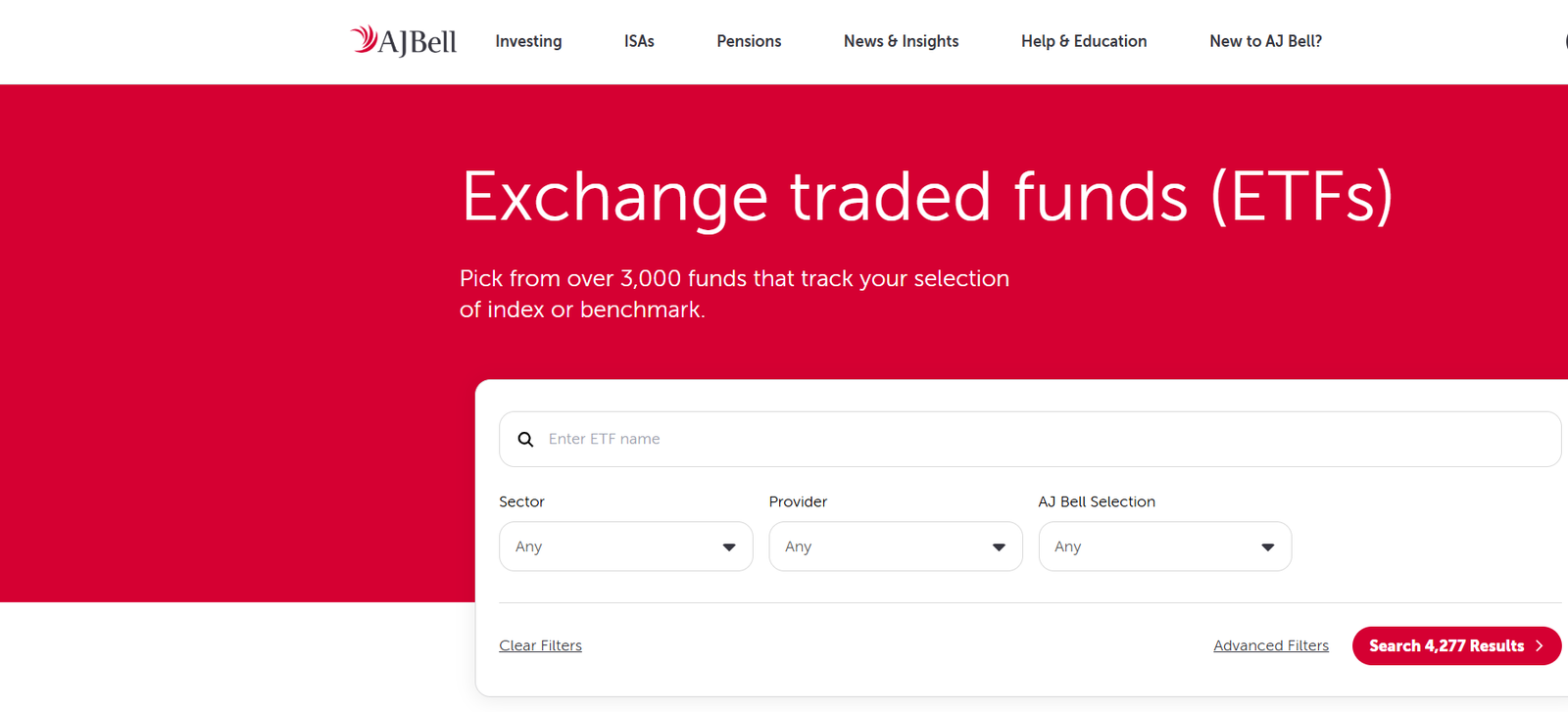
Should you use AJ Bell for trading ETFs?
AJ Bell is a good fit if you want a broad ETF range inside low-cost ISAs and SIPPs. Fees are clear and competitive for larger portfolios, though £5 ETF trades and percentage custody fees can be expensive for small, frequent traders. It’s FCA regulated and offers FSCS protection, making it a secure choice for long-term investors.
Key info table
| Factor | AJ Bell summary |
|---|---|
| Fees & Charges | £5 ETF trades (from £1.50 with regular investing); fund custody from 0.25% with caps on ETFs/shares |
| Inactivity Fee | No specific inactivity fee, but dealing costs can add up for small, irregular trades |
| Ease of Use | Very clear, beginner- and expert-friendly web platform; app is simple but basic |
| Account Types | Full UK tax wrapper coverage: ISA, Lifetime ISA, Junior ISA, SIPP, Junior SIPP, GIA; Dodl app as low-cost alternative |
| ETF Range | Around 4,000 ETFs across global, sector, thematic and bond markets, plus 16,000+ shares and 4,000 funds |
| Tools & Research | Strong screeners, lists and education; research and podcasts are excellent, but charting and automation are limited |
How low are the trading fees and ongoing ETF costs on AJ Bell ?
ETF trades cost £5 per deal, or £1.50 via regular investing. Custody on ETFs and shares is capped at £42 a year in ISAs and dealing accounts, and SIPP custody is capped at £120 a year. FX fees and fund trading charges add to overall costs, so active ETF traders may find cheaper alternatives.
How easy is AJ Bell to use for buying and managing ETFs?
The platform is clean and easy to navigate, making ETF buying and monitoring straightforward. The mobile app is reliable but basic, offering simple order placement and alerts but limited inspiration or advanced tools. Dodl, AJ Bell’s separate app, is even easier to use and better suited to beginners.
What account types and tax wrappers does AJ Bell support?
AJ Bell is strong here, offering a Stocks and Shares ISA, Lifetime ISA, Junior ISA, SIPP, Junior SIPP and a general account. This makes it ideal for building ETF portfolios across multiple UK tax wrappers in one place. Dodl also supports ISA, Lifetime ISA and pension accounts with simpler pricing.
How broad is the ETF range and does it include global, thematic and bond ETFs?
AJ Bell provides access to around 4,000 ETFs, covering global markets, sectors, thematic ETFs, commodities, and both government and corporate bonds. This makes it easy to build diversified ETF portfolios across asset classes and regions. Crypto assets are not supported yet.
How strong are AJ Bell ’s research tools, screeners and automation features?
Research tools are strong for long-term investors, including ETF and fund screeners, expert market commentary, webinars, and the Money & Markets podcast. Charting and technical analysis are basic and lack advanced or automated trading features, which may limit active traders.
Who is AJ Bell best for?
AJ Bell suits investors who want to run long-term ETF portfolios inside ISAs or SIPPs and value strong research and support. It’s best for medium to large portfolios and hands-on investors. Those trading frequently or with very small budgets may prefer lower-fee platforms with fractional shares.
Pros & cons
Pros
- Full range of tax wrappers (ISA, SIPP, Lifetime ISA, Junior accounts)
- Large ETF selection (~4,000 ETFs)
- Clear fees with ETF custody capped at £42/year
- Strong research, webinars and investment insights
- FCA regulated with FSCS protection
Cons
- £5 ETF trading fee can be expensive for small trades
- No fractional shares
- Charting tools are basic
- Fund trading fees (£1.50) can add up
- App lacks advanced features compared with newer platforms
5. InvestEngine – Best for ultra-low-cost ETF investing with automation and fractional investing
Should you use InvestEngine for trading ETFs?
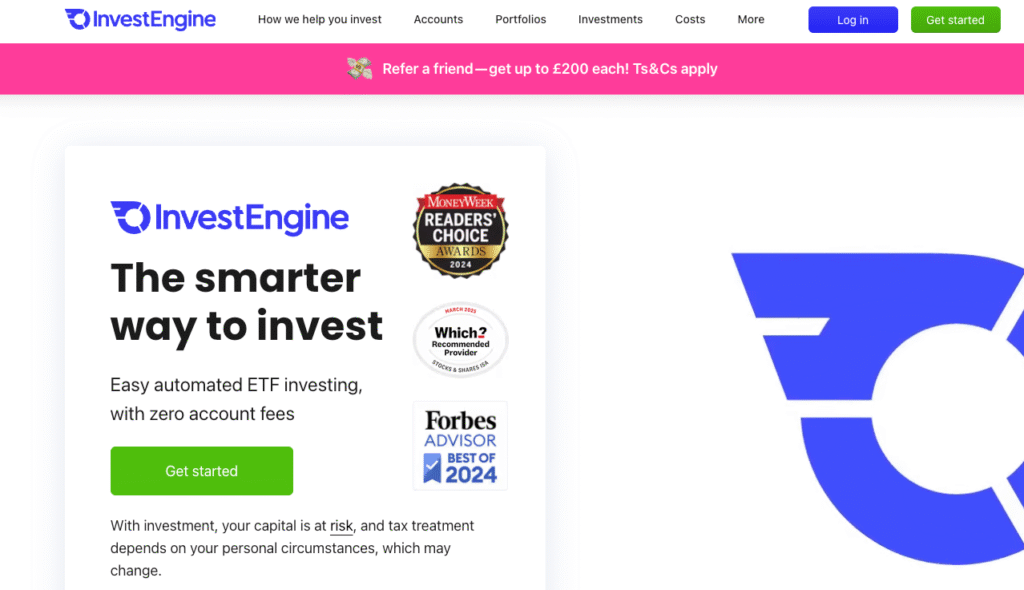
InvestEngine is ideal if you want the lowest-cost way to buy and hold ETFs in the UK. DIY ETF investing is completely fee-free, ISAs and SIPPs have no platform charges, and fractional investing makes it easy to start with small amounts. It’s best for long-term investors who want simple portfolios or automated investing, but not suitable if you need individual shares or advanced tools.
Key info table
| Factor | InvestEngine summary |
|---|---|
| Fees & Charges | Free DIY ETF investing; managed portfolios 0.25% |
| Inactivity Fee | None |
| Ease of Use | Simple, modern platform with strong automation |
| Account Types | ISA, SIPP, GIA, Business Account |
| ETF Range | 700+ ETFs from major global providers |
| Tools & Research | Good analytics and automation; basic research |
How low are the trading fees and ongoing ETF costs on InvestEngine?
InvestEngine is one of the cheapest ETF platforms in the UK. DIY investing has zero platform fees, zero trading fees, and zero ISA/SIPP charges, with only ETF provider fees to pay. Managed portfolios cost 0.25% plus underlying ETF charges. There are no withdrawal, dealing or inactivity fees, making it highly attractive for cost-focused ETF investors.
How easy is InvestEngine to use for buying and managing ETFs?
The platform is simple, clean and beginner-friendly. You can view analytics, holdings and performance clearly, while automated tools like savings plans, smart orders and one-click rebalancing make portfolio management easy. The app mirrors the website and is highly rated for its clarity, though it lacks advanced trading features.
What account types and tax wrappers does InvestEngine support?
InvestEngine offers a Stocks and Shares ISA, SIPP, General Investment Account, and a Business Account. There’s no Lifetime ISA or Junior ISA, but the ISA and SIPP are among the cheapest in the UK, with no platform fees for DIY investors.
How broad is the ETF range and does it include global, thematic and bond ETFs?
InvestEngine offers 700+ ETFs, covering global equity markets, sectors, themes, commodities, bonds and ESG options from providers like Vanguard, iShares, JPMorgan and Xtrackers. It’s not the widest range in the UK, but broad enough to build a diversified ETF portfolio. It does not offer individual shares or mutual funds.
How strong are InvestEngine’s research tools, screeners and automation features?
Tools focus on simplicity and control rather than depth. You get portfolio look-through, performance charts, regional and sector breakdowns, ETF information pages and automated features like savings plans and rebalancing. Research is basic, but suitable for ETF-focused investors who want clarity rather than advanced analysis.
Who is InvestEngine best for?
InvestEngine is best for cost-conscious ETF investors, beginners looking for simplicity, and DIY investors wanting fractional investing and automation. It’s also ideal for ISA and SIPP investors who want to minimise long-term fees. Not suitable for stock pickers or traders who need advanced analytics.
Pros & cons
Pros
- Zero-fee DIY ETF investing (GIA, ISA, SIPP)
- Fractional ETF investing from £1
- Automated tools like savings plans and rebalancing
- Managed portfolios available at low cost
- FCA regulated with FSCS protection
Cons
- ETFs only, no individual shares or funds
- Smaller ETF range than full-service brokers
- Less guidance for complete beginners
- Newer platform with a shorter track record
What do UK investors need to know about ETFs?
What is an ETF?
An ETF (exchange traded fund) is a pooled investment that tracks an index, sector or asset and trades on the stock market like a share. When you buy one ETF you get exposure to many underlying holdings, such as hundreds of shares or bonds, with one trade and a single ongoing fund fee.
What is an ETF platform?
An ETF platform is a UK investment service that lets you buy, hold and sell exchange traded funds inside accounts like ISAs, SIPPs or general accounts. It provides tools to search ETFs, place trades, track performance and manage deposits and withdrawals.
How to trade ETFs
- Choose an FCA regulated platform: Pick a broker with low fees, clear pricing and a strong ETF range.
- Open and verify your account: Complete standard KYC checks with your ID and address.
- Deposit funds: Use a Faster Payments bank transfer or debit card.
- Find your ETF: Search by ticker or category. Review fees, holdings and risk.
- Select an order type: Market orders execute instantly. Limit orders control your entry price.
- Place your trade: Enter the amount in pounds or units and confirm.
- Monitor and manage: Track performance, dividends and rebalance when needed.
Are there property-focused ETFs?
Yes. Property ETFs and REIT ETFs provide exposure to commercial and residential real estate through listed property companies and trusts.
What are the different ETF types?
ETF options range from broad market trackers to specialised funds covering bonds, sectors, themes and commodities.
Beginners usually start with low cost index ETFs, while experienced investors mix several ETF types for diversification.
- Equity ETFs: Track shares in regions such as the UK, US or global markets.
- Bond ETFs: Hold government or corporate bonds for lower volatility.
- Sector ETFs: Focus on industries like technology, healthcare or energy.
- Thematic ETFs: Follow themes such as clean energy, AI or robotics.
- Commodity ETFs: Provide access to assets like gold or oil.
- Dividend ETFs: Invest in companies with reliable or growing dividends.
- Multi asset ETFs: Combine stocks and bonds in a single diversified fund.
What are the most commonly bought ETFs?
UK investors most often buy low-cost index ETFs tracking the FTSE 100, S&P 500, MSCI World, global all-world indices and simple balanced (60/40) global portfolios.
How have they performed in the last 20 years?
Broad global and US equity ETFs have delivered strong long-term growth despite several market downturns. Bond ETFs have been more mixed due to interest rate cycles, returning steady income during stable periods and falling when rates rise.
What are the advantages of investing in ETFs?
- Low cost and transparent
- Diversified exposure with one trade
- Easy to use inside ISAs and SIPPs
- Simple to build global portfolios
- Clear ongoing charges and holdings
What are the disadvantages of investing in ETFs?
- Market risk still applies
- Some ETFs (niche, leveraged, inverse) are complex
- You pay spreads and FX fees on overseas ETFs
- Frequent trading increases costs
Can I trust these top ETF brokers in the United Kingdom?
Yes, when they are FCA regulated and offer FSCS protection on eligible cash. Trusted platforms also segregate client funds and use strong security like 2FA.
What makes the best ETF brokers stand out from the competition?
- Low, transparent fees
- Strong ISA and SIPP options
- Wide ETF coverage
- Good research tools and education
- Fast, reliable trading and support
- Clear disclosures and robust UK regulation
How can I maximise ETF flexibility and tax benefits?
Use a Stocks & Shares ISA for tax-free returns and a SIPP for tax relief and long-term compounding. Automate monthly investing, keep portfolio turnover low, and rebalance periodically.
Can you buy ETFs in a Stocks & Shares ISA?
Yes. ETFs inside an ISA grow free from UK capital gains and dividend tax, making this one of the most efficient ways to invest long term.
Can you buy ETFs in a pension?
Yes. SIPPs allow ETF investing with tax relief on contributions and tax-free growth until withdrawals. They are ideal for long-term ETF accumulation.
Is it safe to invest in ETFs?
ETFs from major providers are structured with segregated assets and strong regulation. Investment risk remains, but operational risk is low when using FCA-regulated brokers.
How do ETF platforms handle commission versus spread costs?
Some charge £0 commission and earn through spreads and FX; others charge a dealing fee but offer tighter spreads. Compare total costs, not just headline pricing.
Conclusion
The best ETF platforms in the UK make it easy to build low-cost, diversified portfolios while keeping fees transparent and account options flexible.
For beginners, eToro stands out for its simple app and social tools that help new investors learn as they go. InvestEngine is the strongest choice for fee-conscious users thanks to its zero-fee DIY ETF investing and automation features.
AJ Bell remains a top option for long-term investors who want to hold ETFs inside ISAs and SIPPs with strong research support, while XTB suits active traders who value fast execution and pro-grade tools.
Each platform excels for a different type of investor, so the right pick depends on your experience level, investment style and preference for cost, tools or account flexibility.
FAQs
What is the best ETF platform for beginners?
eToro and InvestEngine are top beginner picks: eToro for its simple app and £0 ETF commissions, and InvestEngine for zero-fee DIY ETF investing with automation.
What is the best platform to buy ETFs in the UK?
InvestEngine is the cheapest, AJ Bell is best for ISAs and SIPPs, and XTB or eToro suit active or app-first investors.
What features should I look for in an ETF platform?
You should look for an ETF platform with low fees, ISA/SIPP support, a strong ETF range, a simple app, solid regulation, and helpful tools and educational resources.
How do trading tools enhance your ETF strategy?
Screeners, analytics and rebalancing tools help you stay diversified, manage risk and invest consistently.
Can I buy US ETFs on UK platforms?
You can buy UCITS versions of US ETFs, but many US-domiciled ETFs are restricted for UK retail investors.
Which is the best UK ETF?
There’s no single best ETF, but global trackers (FTSE All-World, MSCI World) are popular core choices.
What is the 3-5-10 rule for ETFs?
It’s a simple guideline encouraging long-term holding and reviewing returns over 3, 5 and 10 years.
What’s the cheapest ETF platform?
InvestEngine is the cheapest for DIY ETF investing (zero platform and trading fees).
References
- https://docs.londonstockexchange.com/sites/default/files/documents/etf_listing_and_admissions_guide_2020.pdf
- https://docs.londonstockexchange.com/sites/default/files/documents/Exchange%20Traded%20Funds%20-%20Introducing%20and%20Operating%20ETFs%20in%20the%20UK%20%28002%29_0.pdf
- https://www.theia.org/sites/default/files/2019-06/20170306-authorisedfundsaregulatoryguide.pdf
- https://www.citystgeorges.ac.uk/news-and-events/news/2025/january/etfs-boost-equity-market-efficiency-study-finds
- http://etheses.dur.ac.uk/12566/